
By Danielle M. Crosier, Vermont Country Magazine.
NORTH BENNINGTON — Sandra Magsamen has been helping people say what’s in their hearts since she was 12 years old. Back then, it wasn’t through bestselling children’s books or nationally licensed gift lines; it was through tiny hand embroidered charms from the Woolworth’s five-and-dime, sent to the classmates that she could no longer see.
“I began making things that my sisters could take to school to communicate with my friends, who I didn’t see anymore because I was home all the time,” she recalled. “So, I learned to crochet. I learned to embroider. I made drawings – and they all had little messages like ‘sending my love’ or ‘have a happy day.’”
Today, those little messages have grown into a global body of work – books and objects sold around the world – all grounded in what Magsamen calls her life’s mission, “What I do today is an extension of what I’ve always done. I help people connect one heart at a time.”
And, for the past two decades, she’s been doing much of that work from North Bennington, where she and her husband, painter Mark Barry (whose art is always on display at Pangaea), have contentedly woven themselves deep into the fabric of the local community.
A life-changing accident at 12
Magsamen’s creative life began in childhood, and was born out of a crisis that occurred on her father’s small Maryland farm.
At age 12 – while working with her father and sisters to clear rocks from a field – the group followed a heavy trailer, tossing the rocks from the soil into the back, “We were told not to walk behind it, and it was filled with rocks. We were filling it all day,” she said. “It was the end of the day, and my sister Karen walked behind it, and it fell. My leg got caught under the equipment. I was trapped.”
Her twin sister, Susan, was sitting by a campfire when she heard Sandra’s screams.
“I kept yelling at her, ‘Susan, help me, help me!’ And my father couldn’t lift it. She came over, and in an instant she lifted it off my legs – and I pulled myself out.”
The injury was severe – a compound fracture that led to repeated hospitalizations and a year of home-and-hospital schooling with other children facing serious accidents and illnesses, including cancer.
“That year was so pivotal for me,” Magsamen said. “I learned probably the most important lessons of my life – you’re not promised tomorrow, so the moment really matters. And, that love is the most powerful – because my sister, with her great love for me and the blessing of adrenaline, was able to lift that off my leg and save my leg.”
Isolated at home, she turned to making things – small, handmade “lifelines” – to bridge the distance between herself and her friends.
“My whole life, that’s what I’ve done – because I needed it so much as a 12-year-old girl, and it stuck with me,” she said. “I understood how important communication and connection at the spirit level – at the heart of who we are – is. That’s, for me, where life is lived the most fully.”
From art therapist to “Messages from the Heart”
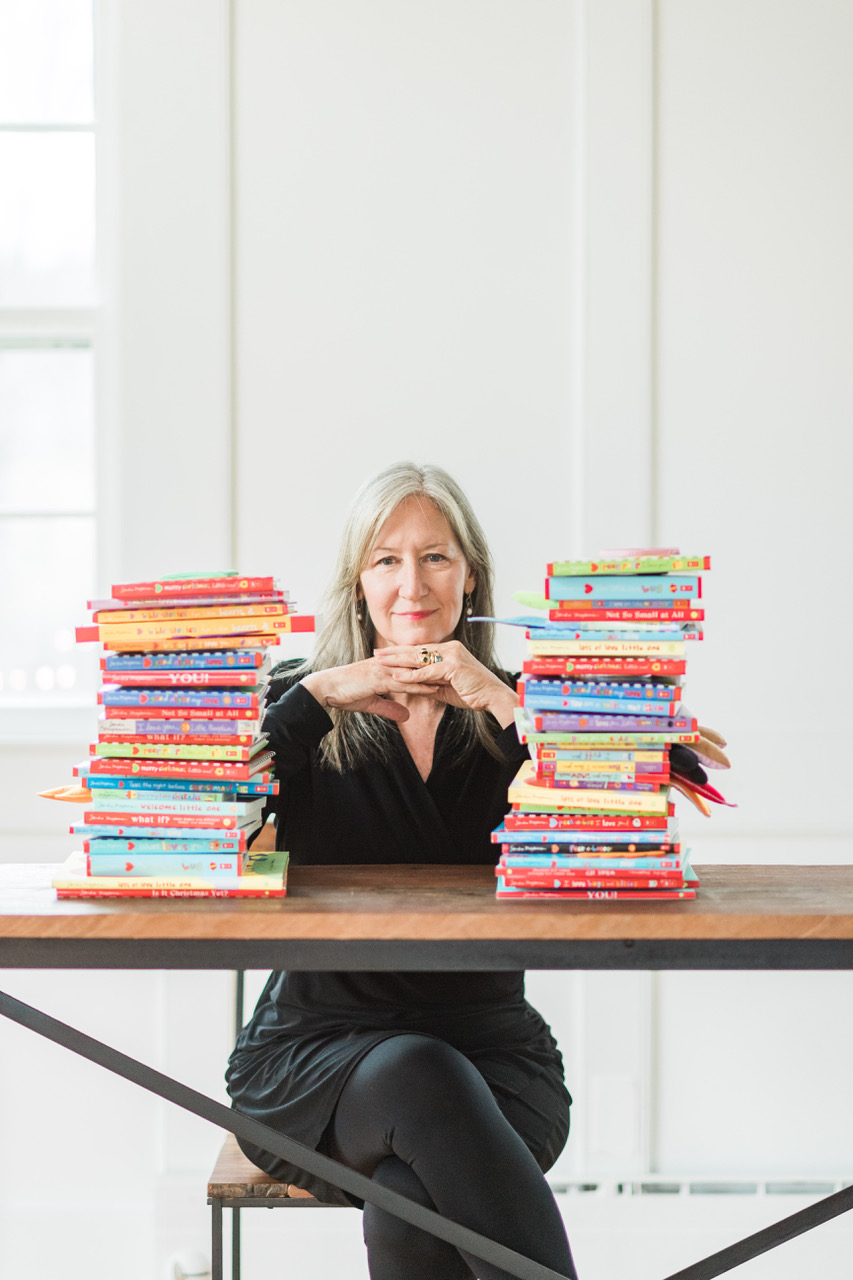
That early experience with art and connection led Magsamen to art school and, from there, into the field of art therapy. She earned a master’s degree in art psychotherapy from Goucher College and spent years working with people on the margins – children in foster care; women healing from cancer and postpartum depression; men in a forensic facility in Jessup, Maryland; and older adults in nursing homes who had “become sort of detached and despondent from meaning in life.”
“All the while, I was hearing the messages that they wanted to share, and that they weren’t able to, and that impacted their mental health,” she said. “I started writing down the things people wanted to say. And, the common denominator was that we all had parts of ourselves that we weren’t able to express and deeply connect with either ourselves or with others.”
In a nursing home ceramics room – the kind once used to make greenware Christmas trees and knickknacks – she learned to use the kiln. She began rolling out clay slabs and carving simple, honest words into them – “In a world where you can be anything, be yourself” and “I’m sorry for all the things I said.”
She embellished them with beads and baubles scavenged from antique shops.
“I realized I loved doing it so much,” Magsamen said, laughing as the memory once again brought joy. “At that time, I was pregnant with my one and only daughter. I filled her nursery with the things I wanted to say to her in these plaques and messages.”
And, it was her sisters who noticed first, “They would come over and they would be like, ‘Can I have that one? I need to give it to a friend who’s having a hard time.’ Or, ‘Can you make this for me and say this because my friend is going through a hard time and this is the message she needs to hear?’”
What began as plaques for family and friends soon became a full-fledged business. She and her husband started doing local craft shows on weekends and quickly realized that they had truly tapped into something with much greater possibility.
“The first show that we did, we sold out of all the stuff,” she said. “We were like, ‘This is not sustainable with a baby.’”
Taking a leap of faith, they signed up for a wholesale buyers’ market in Atlantic City. Unprepared for the volume of interest, they had to scramble just to get duplicate order forms, “Before we knew it, our booth was filled with people, and we were writing orders and orders and orders,” she laughed. “We got home and we laid them all out on the table, and then wrote people back and we said, ‘You’ll have your order then.’ And we started making pottery and shipping it all over the country – and even Japan.”
With mentoring and practical help from her mother – who handled early invoicing and helped “put the business together” – the pottery company grew. The business, first called Table Tiles soon transitioned to Messages from the Heart, and it occupied a former bee farm in Maryland – complete with a honey “warm room” that was perfectly repurposed to become the company’s pottery drying room.
A national platform, built on simple words
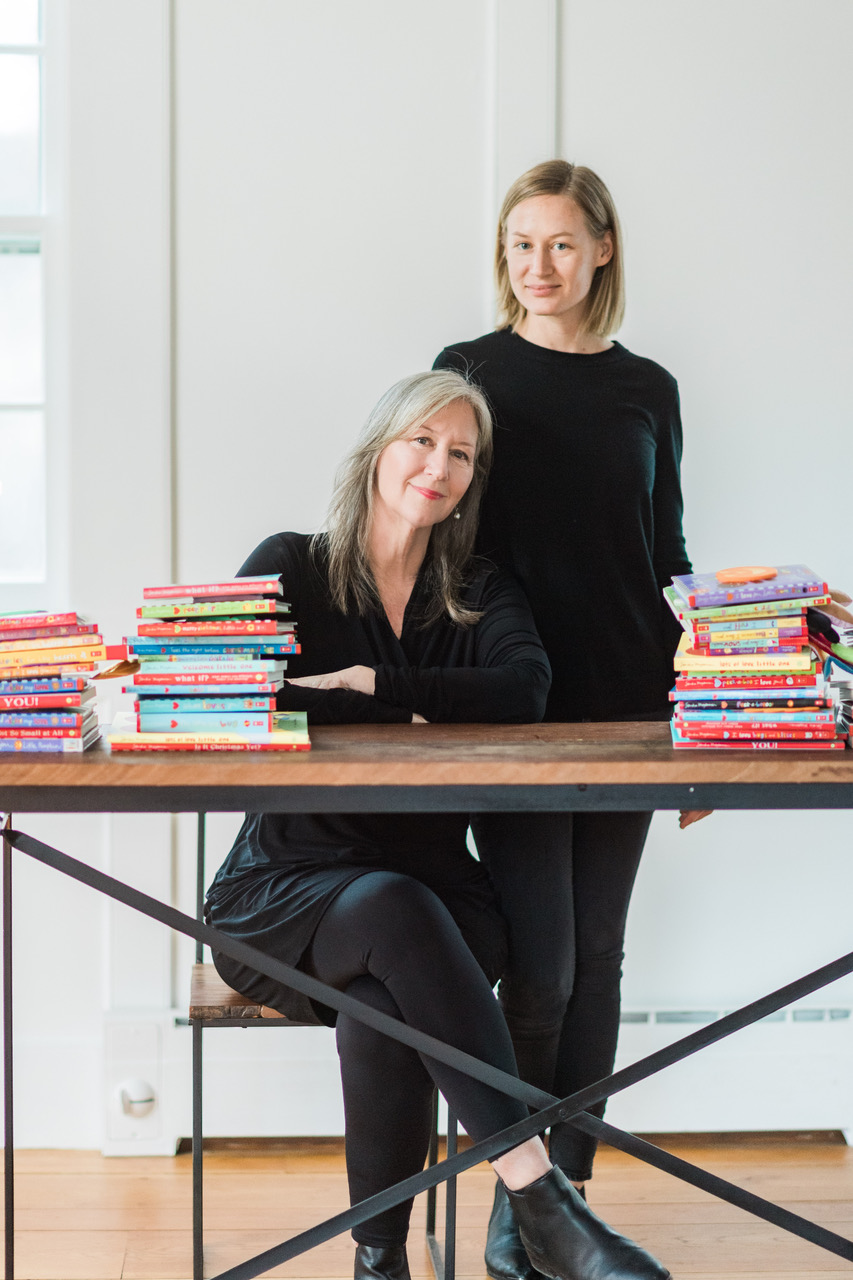
By the 1990s, as the American gift industry shifted, Magsamen’s work caught the eye of major brands. At the New York Gift Show, large companies approached her about licensing her designs – Stuart Tabori & Chang, Hallmark, Scholastic, Lenox, Department 56/Silvestri, 1-800-Flowers, and eventually retailers such as J.C. Penney and Walmart.
Her verses and imagery moved from handmade plaques into mass-produced gifts and then into children’s books, extending the same “little messages” to a vastly wider audience.
All of it was rooted in the same simple impulse that she had felt and experienced as a girl stuck at home with a broken leg – to reach out and to help people say what they couldn’t quite find the words or the courage to say for themselves.
“And, I’ve created a career in making books and objects that were meaningful, that helped people connect from their heart,” she said. “And, these were messages from the heart.”
Two publishing paths, one core message
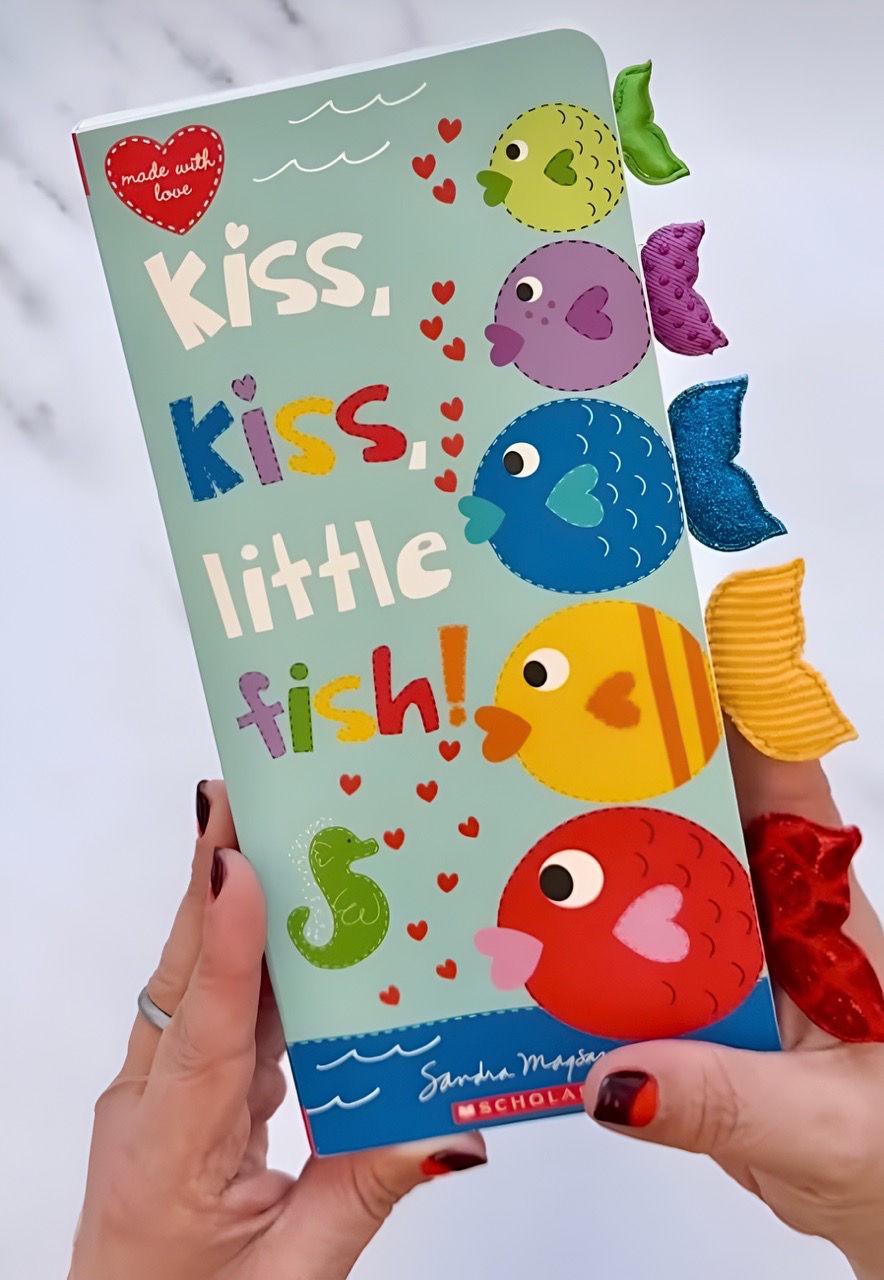
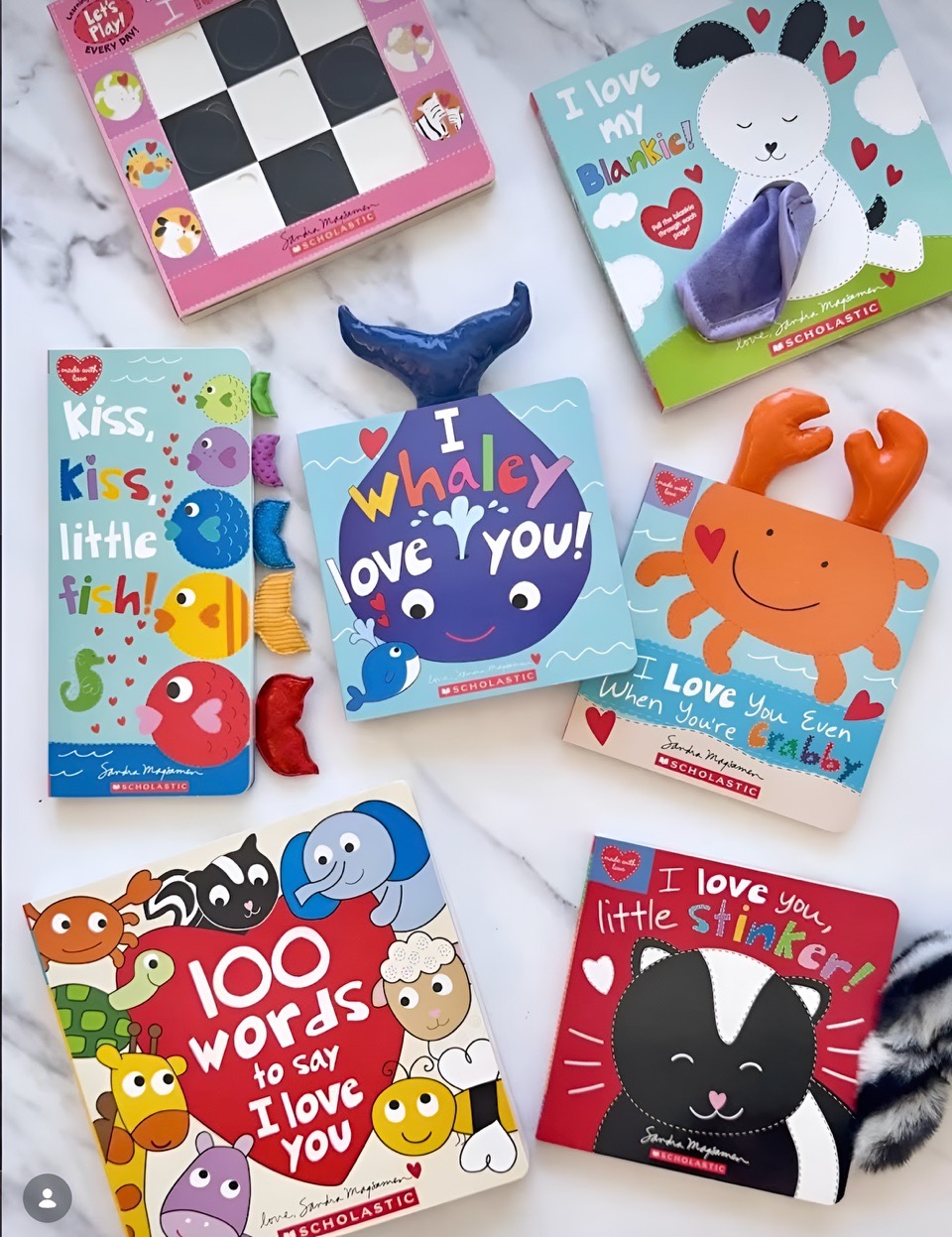
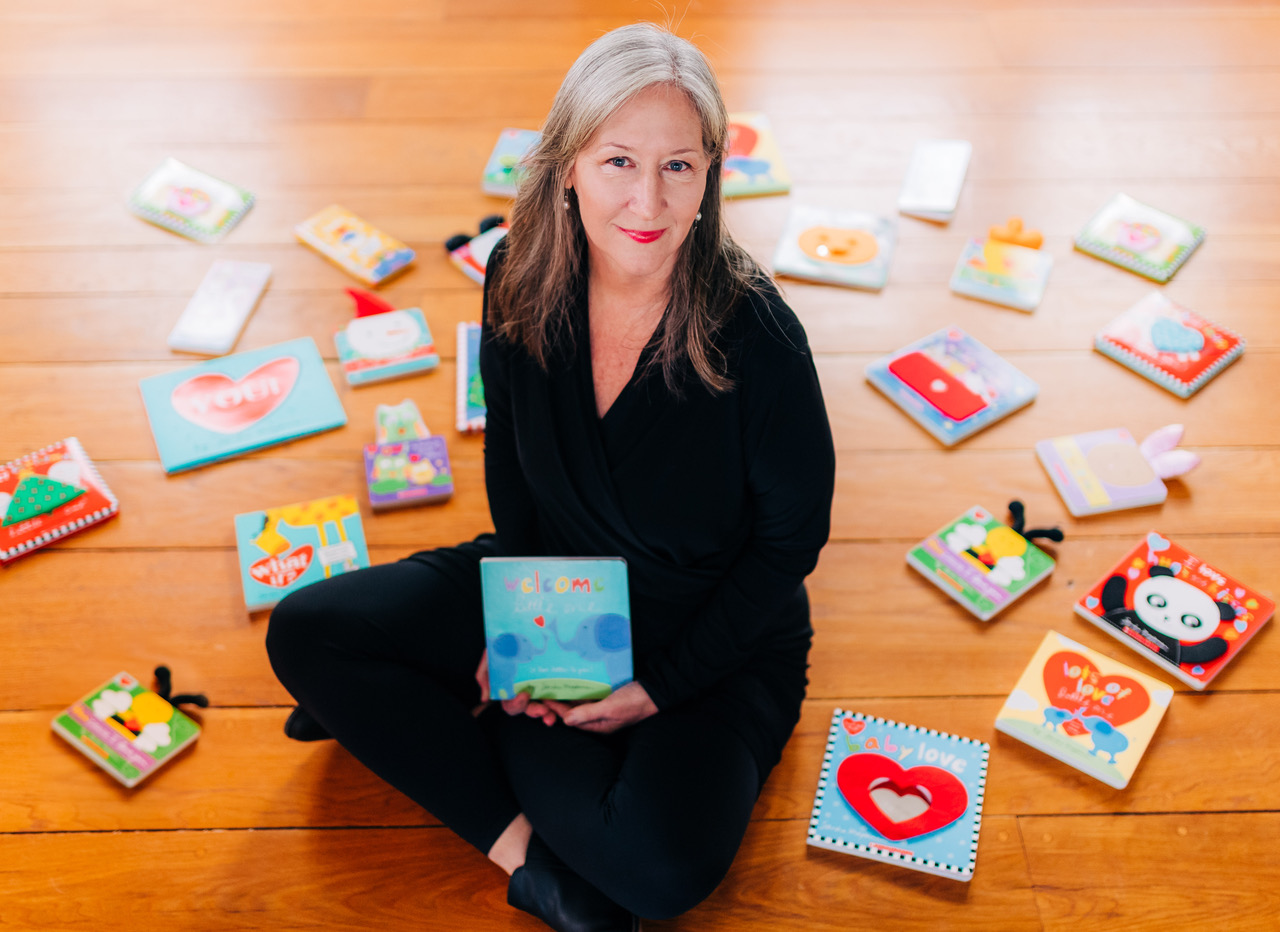
Today, Magsamen works primarily in children’s publishing, with two distinct but overlapping lines.
With Scholastic, she’s created more than 100 interactive, tactile “novelty” titles over the years – the kinds of books that invite small hands to lift, to tug, to investigate, and to cuddle.
“Early on, I realized that having an interactive component on the cover or within the book really helped the child engage and get into it,” she said.
Her first Scholastic picture book – “When I Grow Up, I Want to Be Me” – was written for her daughter, Hannah.
“I said, ‘What do you want to be when you grow up?’ She goes, ‘I have no idea how to grow up,’” Magsamen recalled, laughing again. “And I said to her, ‘You know, everything that you need, you already have. You’re everything you need to be.’”
From that conversation came a poem – and then a book – encouraging children to see themselves as already whole.
Board books like “I Love You, Honey Bunny” feature plush bunny ears sticking out of the top, turning the book itself into a comforting “transitional object.”
“I wanted to extend the message of ‘I love you’ to a child through the story, but children often need to have something to hold on to,” she said. “So, the book now became a book and something beloved to hold on to – so it was a cross between a book and a plush animal.”
At Sourcebooks, Magsamen has developed a different kind of series, centered on a recurring character – a little elephant called Little One.
It started with a poem that she had written as a promise to her daughter – originally published in an earlier, less-successful book. When Sourcebooks publisher Dominique Raccah read it, she immediately recognized its potential – and together, she and Magsamen reimagined the project.
“What came from that was how to tell the message in a stronger way, with stronger imagery, in the right format, in the right way that will resonate with families and children,” Magsamen said.
Working closely for years with editor Karen Shapiro, she built a robust line of Little One board books, following the character through “all of the stages and phases of a little one’s life – from sleeping to Christmas to potty time to first words.”
The two publishing tracks – one filled with many different characters, the other focused on a single small elephant – reach the same audience from different angles, “Two very different ways to approach,” Magsamen said. “The same parents/same families buy all of the books – but [it’s] very different storytelling.”
Finding “Slow Living” in North Bennington
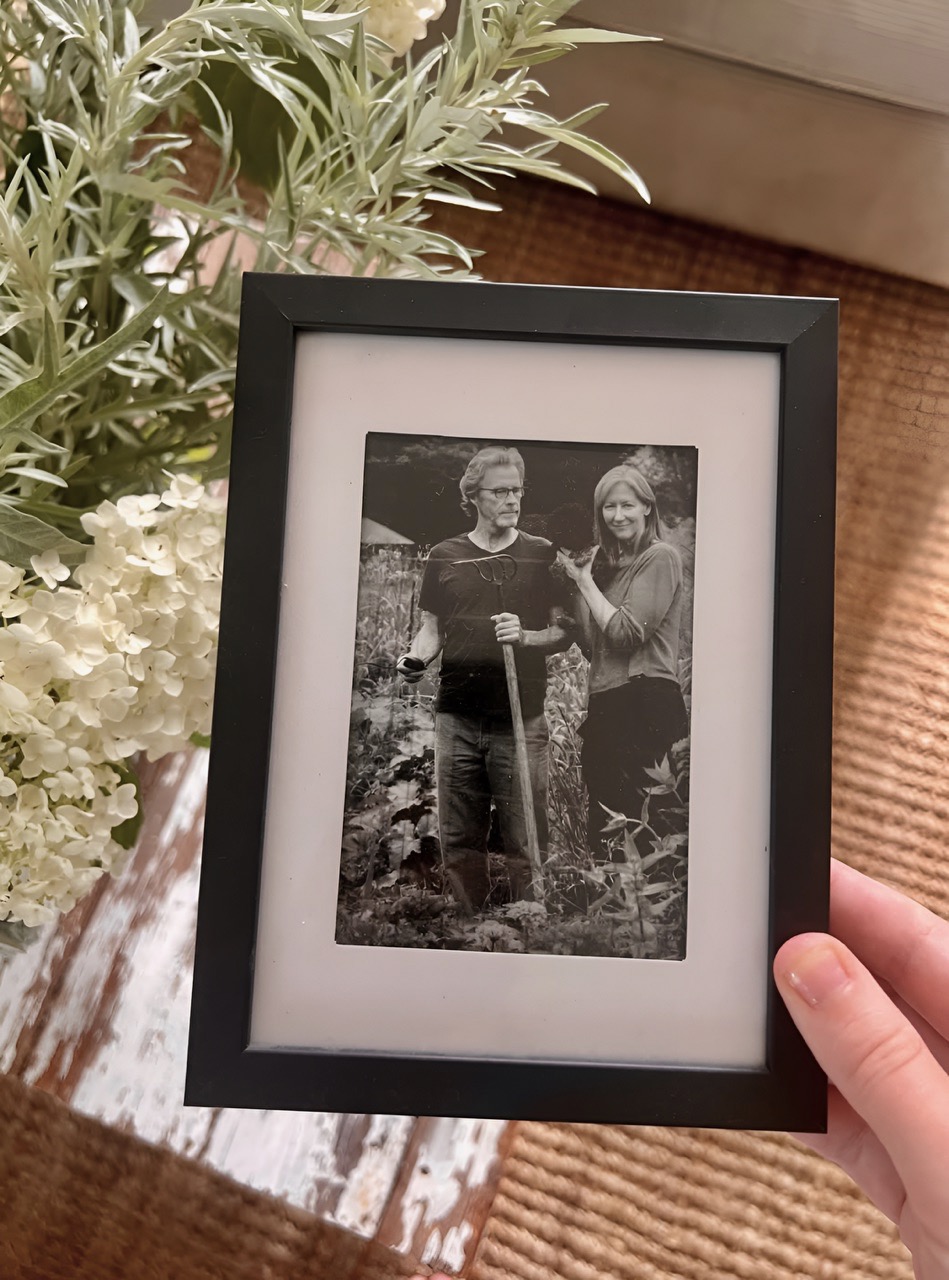
Magsamen’s path to Vermont began with a college friend, Matthew Perry of the Vermont Arts Exchange. The two met decades ago at the Swain School of Design in New Bedford, Massachusetts, along with Magsamen’s future husband, Mark Barry. For years, they visited Perry’s family in Weston, and then later in North Bennington.
When Barry and Magsamen’s daughter Hannah chose Bennington College, the family’s ties to the Southern Vermont area deepened. Frequent visits led to a stay at a Park Street bed and breakfast and, one morning, a walk that changed everything.
“We got up to walk the Mile Around [Woods], and the house next door – the Hiland Hall Farmhouse – had a big ‘for sale’ sign in front of it and it said ‘condominiums,’” Magsamen recalled.
One phone call, a meeting at the Garlic Festival, and – in what may be the most Vermont detail of the story – a rare pink sweater later, the family bought their first small condo at Hiland Hall. Over time, they added two more units, sold their Maryland home, and gradually shifted their lives north.
Now, Magsamen and Barry live full-time in North Bennington, and she says the move has profoundly changed her work, “In Maryland, my life was much faster,” she said, grinning. “Here, I find that I’m able to tap into that still small voice of myself in every day. I can find those quiet moments where I can hear myself, and therefore I can write what matters to me and what I think is important.”
She’s also embraced a deeply local life.
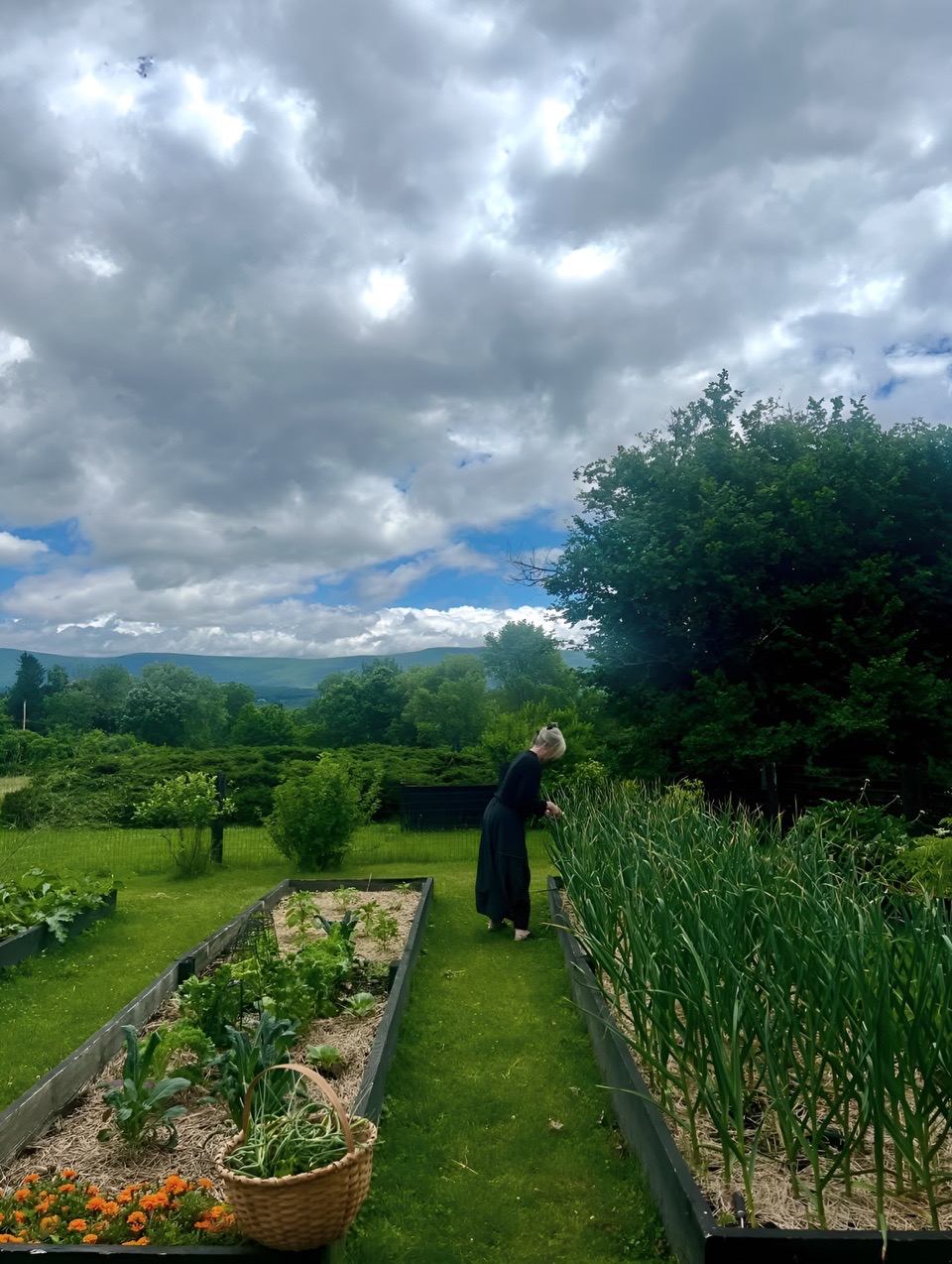
“I like knowing the farmer who picked my eggs. I like knowing where my lettuce comes from,” she said with a laugh, noting recent national news about contaminated salad greens. “I go up to Bea Berle and I know Bea’s picked that lettuce that morning. I have my own garden, too. We live very local. We live very slowly. We know our neighbors. We help our neighbors; they help us. It’s a pace of life that is so beautiful and so different.”
She compares it to the Italian idea of la dolce vita, the sweet life, “I feel like I’m alive here, and I’m really living. I’m living my best life, my authentic life, my most creative life,” she said. “It’s been incredible to live in Vermont. I mean, I love it here. I love it.”
Growing carrots, and growing a community
True to her mission of “connecting, one heart at a time,” much of Magsamen’s energy now also goes into community work.
She serves with Sage City Syndicate, a long-standing organization focused on housing in the North Bennington area. She helped start the North Bennington Roundtable, which brings together nonprofits and residents to plan community events. And, she is a founding force behind the Friends of Hiland Hall Gardens, a project that turns historic grounds into an outdoor classroom for local children.
“We restored the gardens and we bring children and students in from the Village School, and we teach them education in the garden – so they learn to grow, harvest, and make food,” she said.
For her, the garden is more than a place to grow vegetables – it’s a living metaphor.
“I really believe that if we teach a child to grow a vegetable, we’re teaching a child to grow anything – to grow an idea, to grow a friendship, to grow a life, to grow any ideas that they have,” she said. “To grow a carrot, you know, you’ve got to plant an idea, and nurture the seed. When the weeds come, you’ve got to learn how to throw out the weeds. You need to know when it’s ripe and when it’s ready to share, and then how to prepare it, and how to put it in the world.”
“For me, the whole program is really a metaphor for helping a child learn to grow themselves,” she added. “It’s not just about growing carrots; we’re growing community – and that really matters.”
Looking ahead – a grandmother’s voice
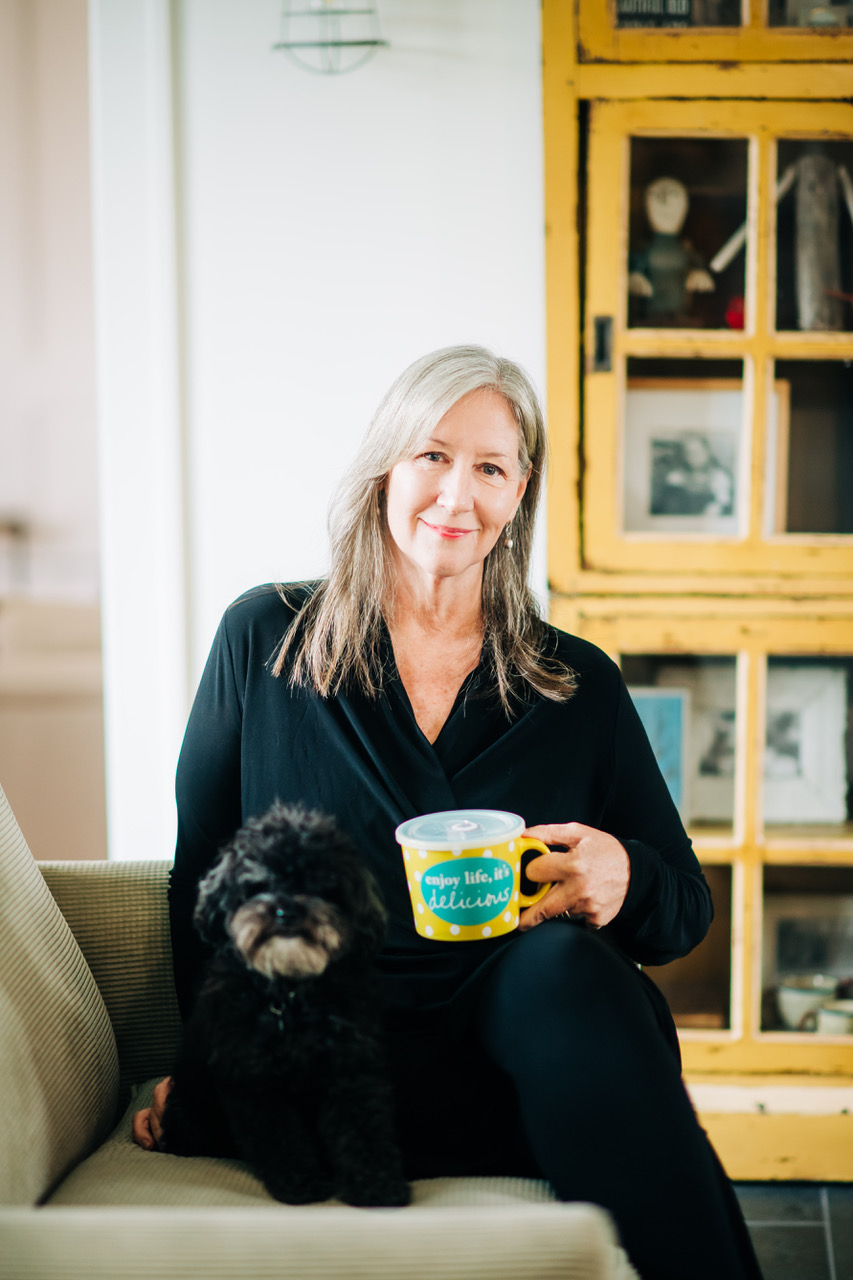
Even after decades of creating, Magsamen is quick to say that she never had a master plan – just a willingness to follow what felt meaningful.
“I didn’t know the path, but I kept walking,” she said. “And, when an interesting direction and something seemed like it had meaning – I walked that path – and then I met people along the way that showed me things that I would have never seen, and that led me to the next thing.”
Now, as her daughter prepares to welcome a baby via surrogate, Magsamen is listening for the next evolution of her voice – and it is that of a grandmother.
“I’m really starting to cultivate what [writing] might look like from the voice of a grandmother,” she said. “I’m not writing as a grandmother now. I’m writing as a mother, really, and I think that’s going to be a different voice and in another way.”
Whatever comes next, Magsamen intends to meet it the way she has met everything since she was that injured 12‑year‑old girl first discovering the power of a small handmade message sent out into the world.
“I really have a lot of faith in life opening and unfolding as it should,” she said. “And, I will embrace it. I’m not afraid to wholeheartedly embrace what comes in front of me – and I think that’s how I’ll live the rest of my life.”