By Danielle M. Crosier, Vermont Country Magazine.
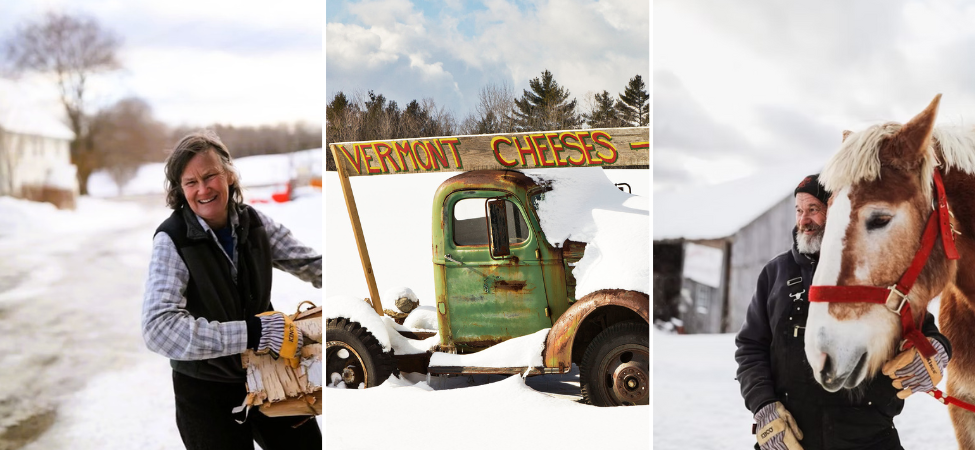
LONDONDERRY — Nestled into the folding hills, valleys, and woodlands of Londonderry’s mountainous terrain lies Taylor Farm, an aged smallholding with its roots buried deep in the fabric of the Southern Vermont landscape.
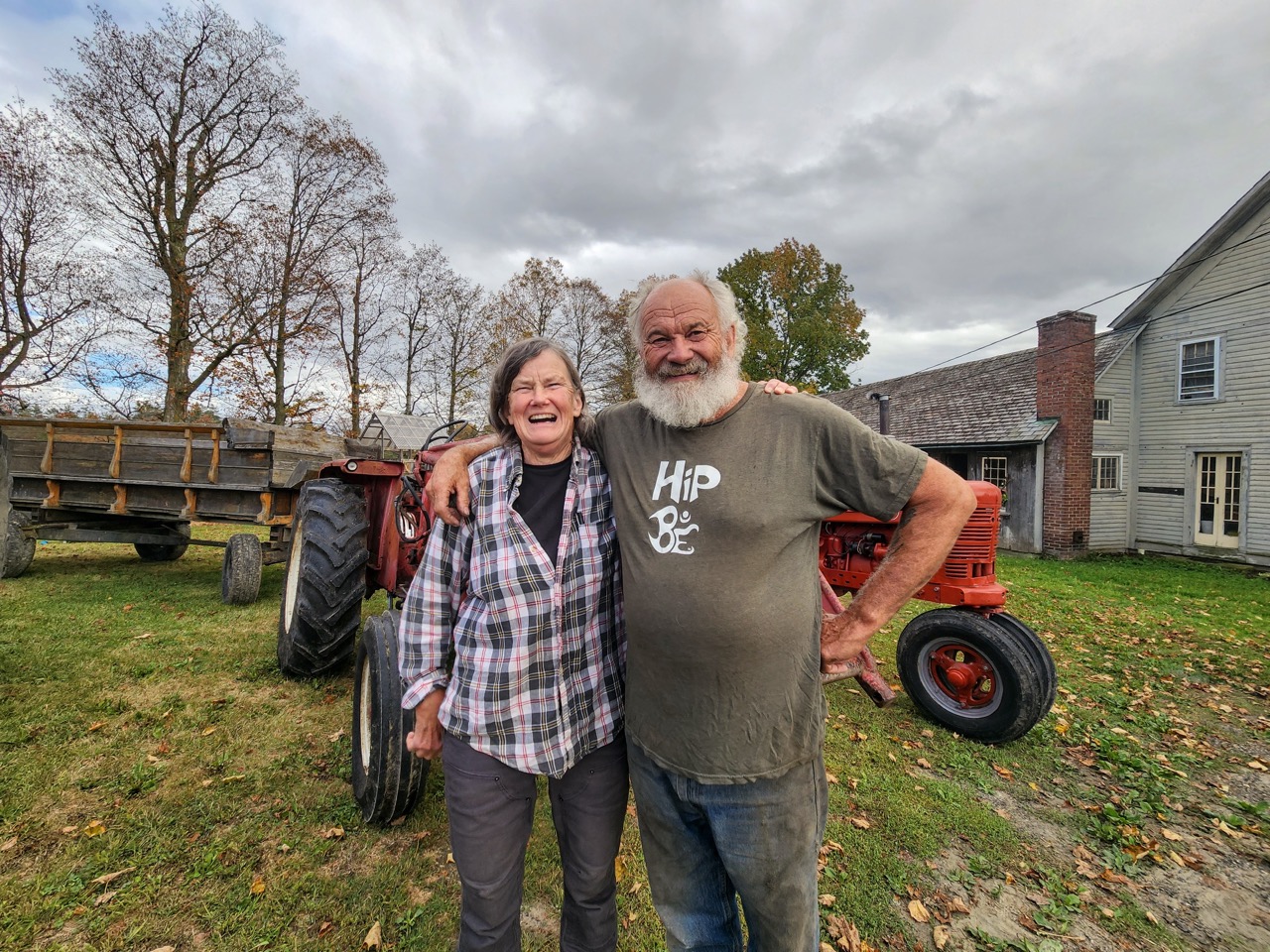
With the farm’s origin in 1840, current owner (Farmer) Jon Wright, his sister Mimi Wright, and several local assistants have faithfully carried on the same traditions for the last 35 years. While they have watched the world modernize around them, life on the farm has stayed very much the same – and is certainly as demanding today as it was 18 and a half decades ago. Perhaps, farm life is less isolating – but the land still, very much, hosts a rural working farm. And, it was the quintessential nature of this that first attracted Boston photographer Tony Schwartz.
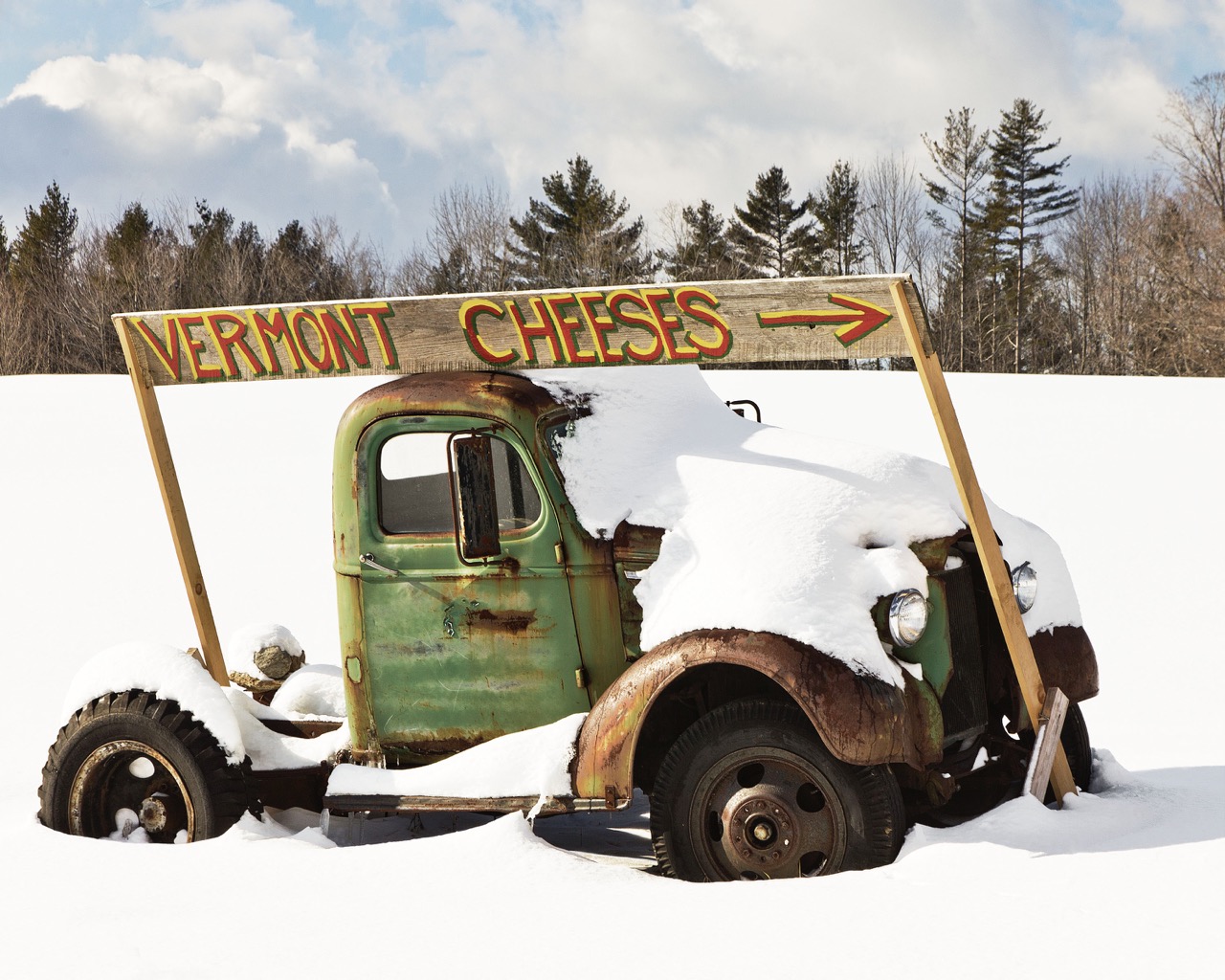
“What brought me into Taylor Farm was, well – that truck,” said Schwartz, indicating one of his photographic prints of a weathered and rusty pale green truck in a field by the side of the road, clumps of thick grasses growing up around it. Above the truck, a hand-painted wooden sign read, “Vermont Cheeses.” A cow grazed nearby, and Schwartz recalled immediately pulling over to snap the photo.
“Clearly, it was a dead truck,” laughed Schwartz, “And, what a symbol of their place – and it just keeps getting better and better as time goes on. I saw it the other day. It has weeds growing up all around it. It is just really really exceptional to take photographs of it because the color keeps changing as it rusts in different places.”
“I drove up the drive and went into the shop,” recalled Schwartz. “And, they were selling images, and I said, ‘Gee – are you interested in having some of my photographs in here?'”

That first introduction led to a series of images and collaborations coming out of Taylor Farm – the wagon rides, the farm animals, the farm store and all of its products, the new and aging farm equipment, the pastoral cheese-making process, the people who toiled the farm, and – the real charmer, the sleigh rides.
“That truck was probably the first thing that I photographed,” recollected Schwartz, thinking back as he scrolled through images. “I took a bunch of pictures of their animals, and took pictures of the shop, and of Mimi in it. Then, it came to be winter and I said, ‘Gee – I’d really like to go on a sleigh ride’ and they said, ‘Come on – we’ll take you around.'”
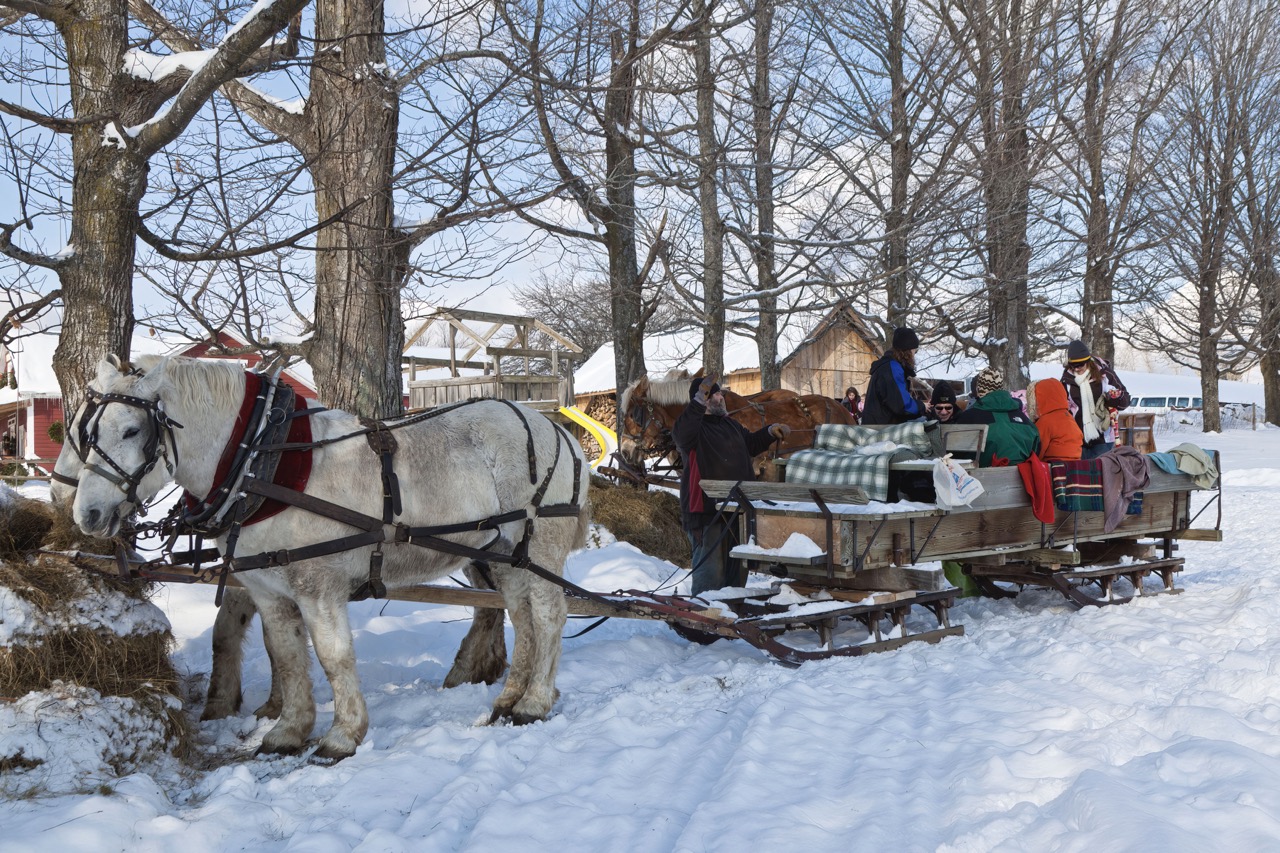
“It was a gorgeous day,” recalled Schwartz. “I was sitting right next to the driver and the ride was fabulous. It was really quite amazing for the photography – and, I just kept photographing as we went along.”
Many of those same images are still sold locally, in places like Three Pears Gallery in Manchester Center, where Schwartz has had a long relationship with proprietors Greg deLuca and Judith Cohen. Schwartz is also quite excited about the exhibition of his work in a relatively new local establishment, Londonderry’s West River Coffee Barn.
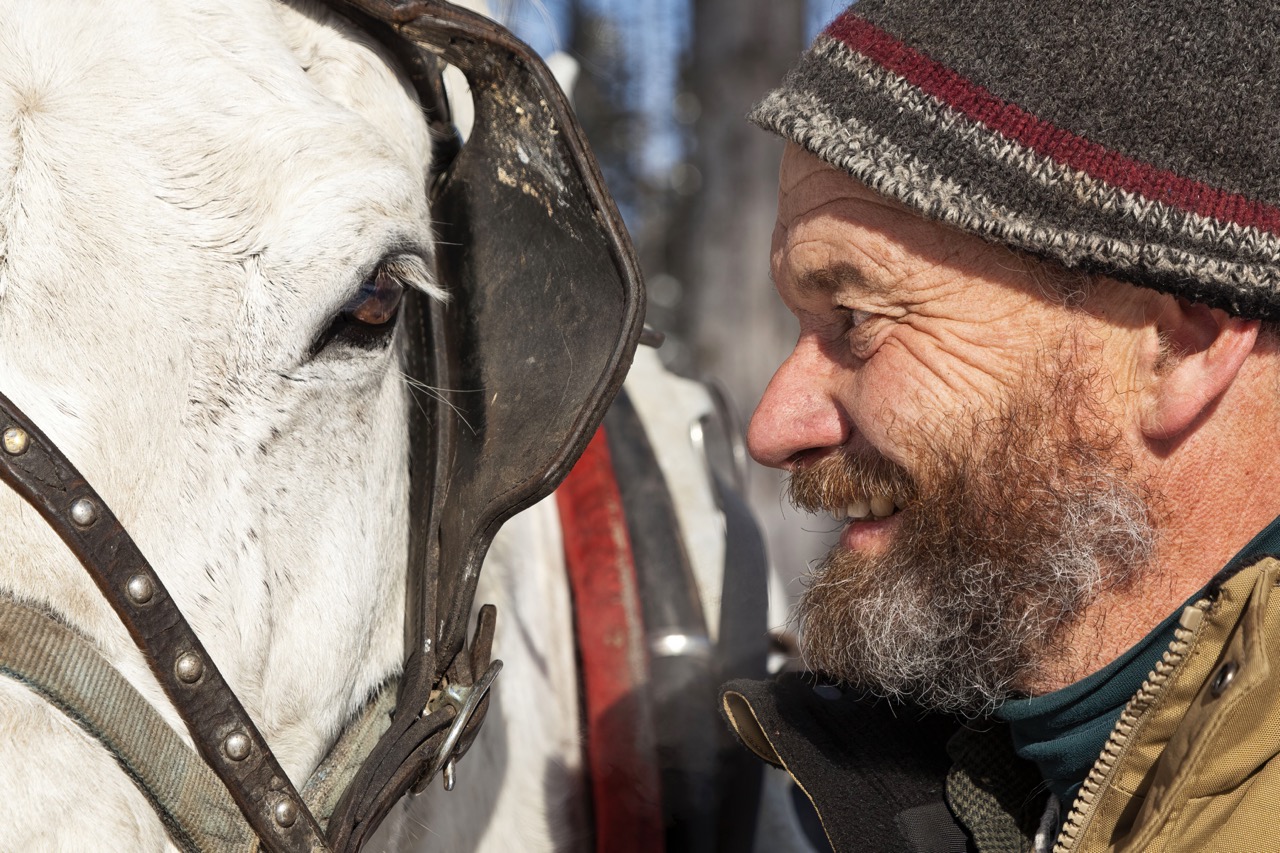
Today, Schwartz is “very much retired” from Tufts University in the Boston Massachusetts area, where he worked as an academic veterinary surgeon and immunologist. He now lives in Peru Vermont with his wife and, while they have maintained their Boston home, they consider Southern Vermont their second home.
“We came here in ’84 and we came here to ski, but it became a summer house too,” said Schwartz. “We bought the cabin; it was just 800 square feet – so, we’re talking a little cabin.” With renovations and additions, the couple have now added a studio where they can work – for Tony, it’s his photography, and for his wife, a pottery and painting area.
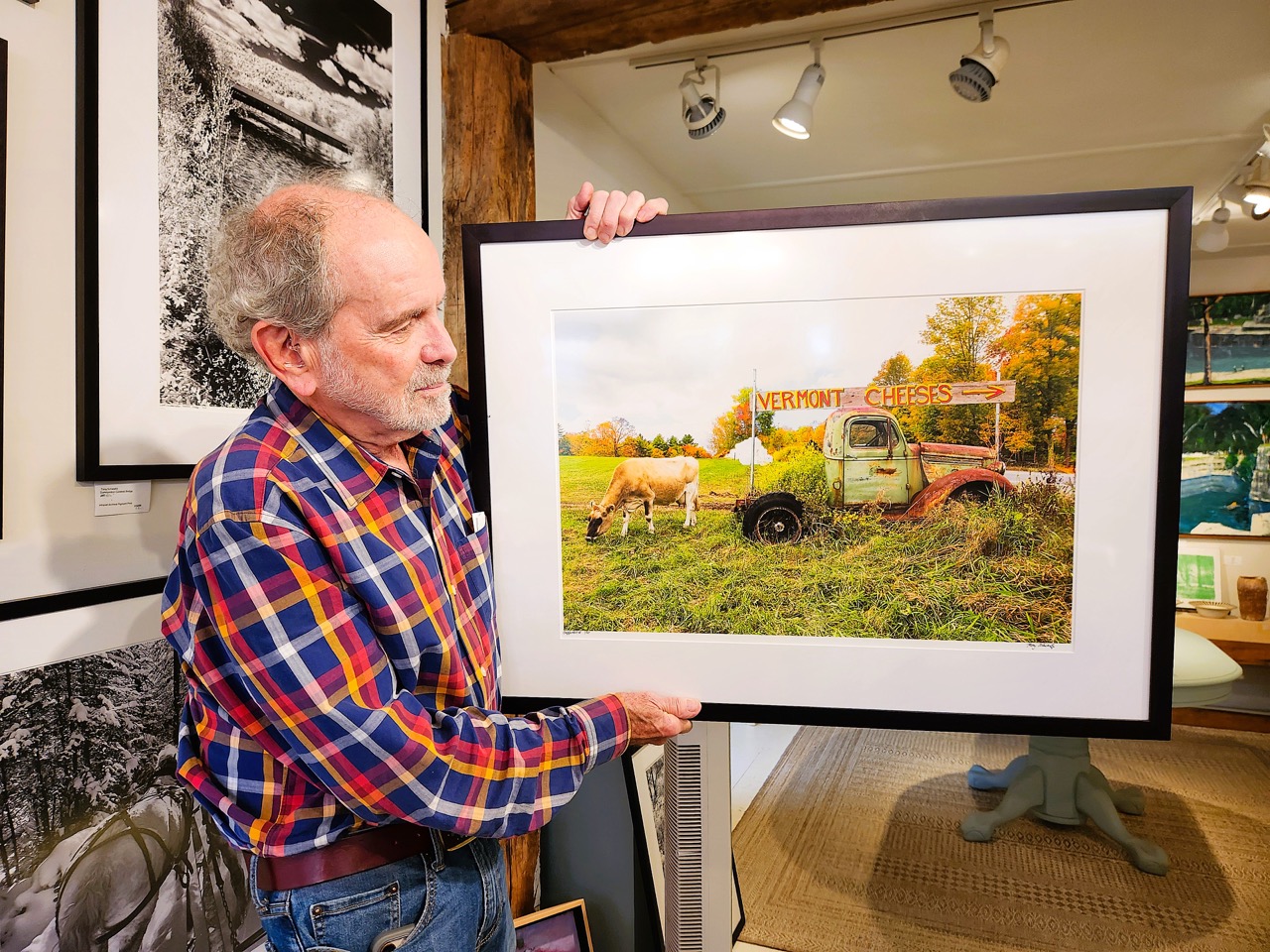
It is here in Southern Vermont that Schwartz seeks inspiration in contrast with much of his more worldly subject matter – the wildlife of Antarctica, the flora and fauna of Sub-Saharan Africa, the people and landscapes of China and Tibet, scenes from Morocco, the Batwa pygmies of Uganda, the Azores, Sicily, France, Cambodia, Vietnam, Mexico, and “elsewhere.”
“I was about to retire, and I have an obsessive compulsive aspect to my personality,” laughed Schwartz. “And, I knew I had to do something – or I was going to drive my wife crazy. I’ve always done photography, but I’ve not done it intensively until I was about to retire. And, art was always a part of me. So, about four years before I retired, I started taking courses at New England School of Photography. And, subject matter – I’ve always loved landscapes and interviewing people, and doing photo stories that go along with that.”
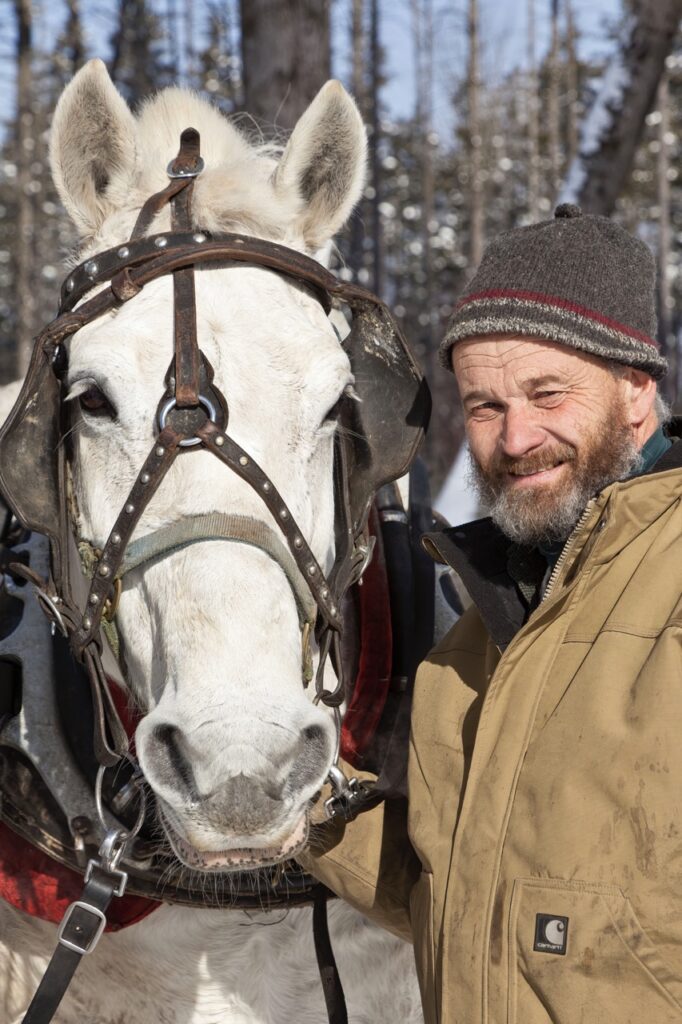
Being a veterinary surgeon, Schwartz added that he recognizes that he is “absolutely” attracted to animals – and this theme is evident in much of his photography. Connecting that passion to his desire to explore the authentic human condition, it only made sense that Schwartz would find solace, connection, and community in rural Southern Vermont.
“The thing that really attracted me to Taylor Farm in the first place is that this was a guy who’s clearly struggling,” explained Schwartz. “I mean, it’s not easy to make a living as a farmer in this state anymore. It used to have thousands and thousands of dairy herds. There are very few left anymore because it’s very hard to farm here.”
“A lot of them have stopped doing it, especially in Southern Vermont,” continued Schwartz. “[Farmer Jon] really doesn’t have very much anymore. He’s a rarity, but he’s doing whatever he can to survive. That’s what he does.”
The ability to be adaptable – to respond to unpredictable challenges such as shifts in market demands, crop diversification, outbreaks, new technologies, climate conditions, soil and water management, access to extension services, and socio-economic factors – is perhaps a Vermont farmer’s most vital attribute.
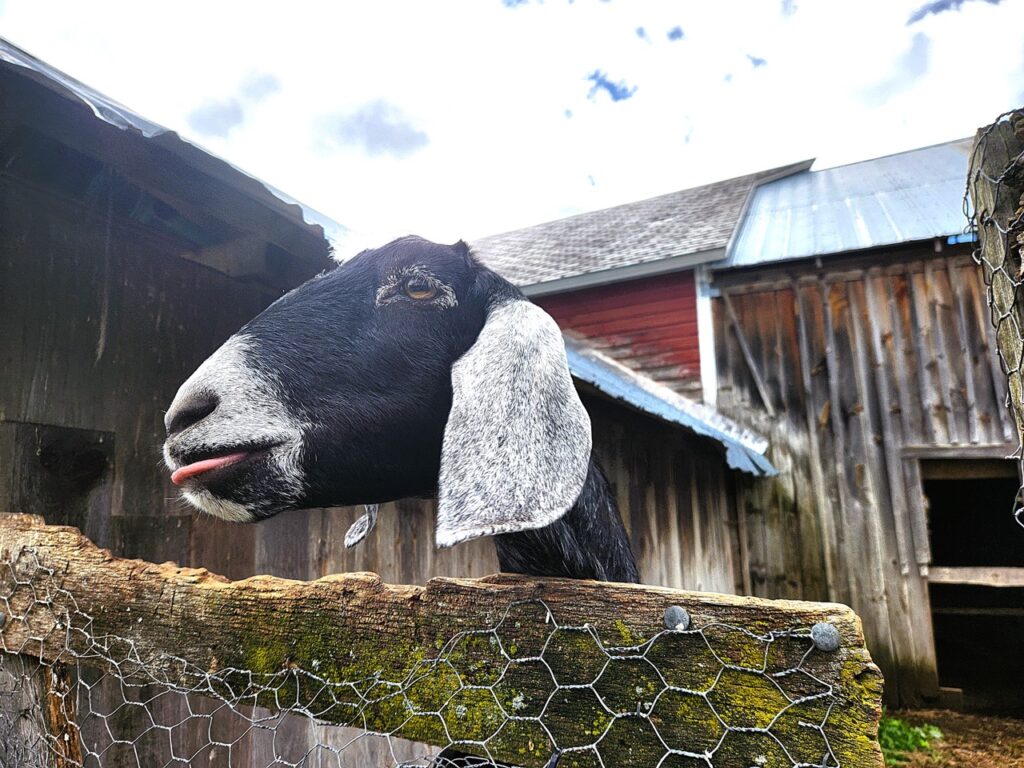
“I came to the farm in ’75,” laughed Farmer Jon, as he stood by one of the tractors. “I came as a teenager to work on the farm, a kid from New York City – thinking I might be here a couple of years. And, I did various things, went to college and whatnot – but, ultimately, came back here and took the farm over and continued to run it as a dairy farm. But, Mimi has been instrumental in keeping the farm organized, as is AJ and Andy and others – mostly women, the good workers and good lookers,” he joked, laughing at Mimi Wright.
Today, the Wrights own the 20 acre core of the farm, and still work much of the surrounding lands, which are owned by the Kohler family, as Mimi Wright explained, “Open land is in Vermont Land Trust, so it cannot be developed – but, it’s still imperative that a farmer maintain it. So, the burden of that falls on Jon’s shoulders, but he benefits because he’s got the use of it.”
In the 1980s, Farmer Jon was milking cows, said Mimi Wright. With three daughters and the family, he just “couldn’t make ends meet, so we got into cheese making.”

It was cheese making that took the family through the next 20 years, bringing them to the height of the industry before they pulled back and reassessed. The process had just become too arduous, and they did not have the ability to hire more laborers.
“We were top of the heap, winning national awards, and we were the only gouda makers in Vermont,” recalled Mimi Wright. “We did a maple smoked Gouda, which was absolutely everybody’s favorite. And then, we did a number of varieties – a traditional smoked, smoked with garlic, caraway and cumin, chipotle pepper, and we did nettle – which nobody does, except in Holland. And, we made our boursin cheese spread, which we still make with garlic and dill and chives and the herbs from the farm.”
“We couldn’t keep up,” continued Mimi Wright, as she stroked one of the dogs on the farm, and then pointed out that all of the dogs were “Jon’s dogs.”
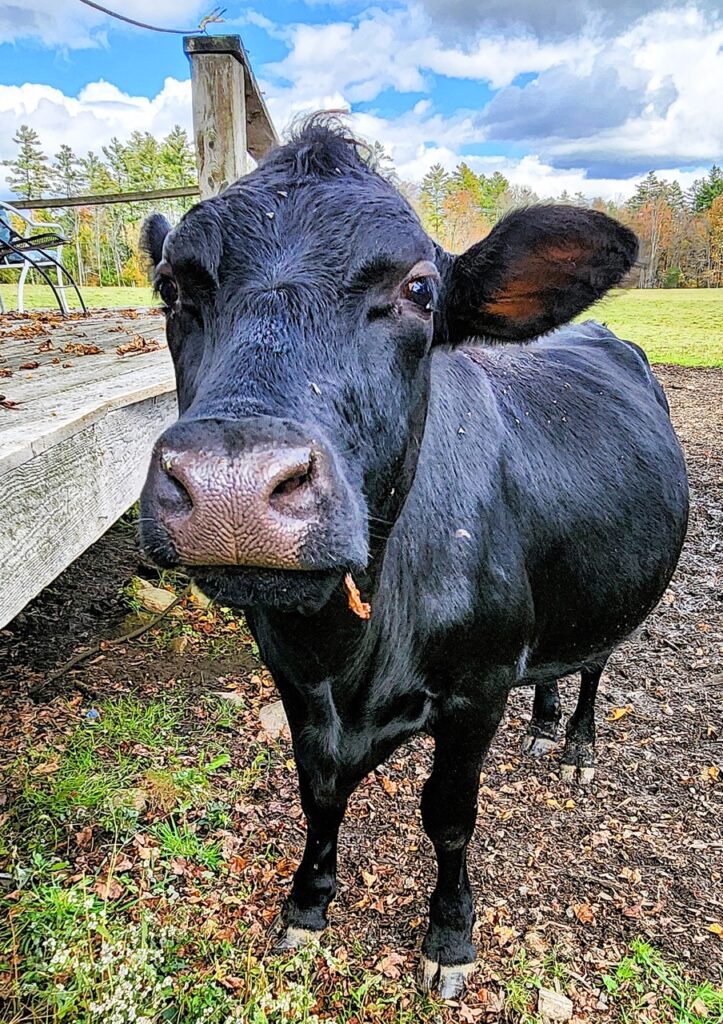
“We’ve never had the financial backing that we needed,” she added. “Everything takes a lot of money, and we’ve always done things on a shoestring – so we had to give up the cheese making. It was very labor intensive. Jon is no longer milking cows, but we still keep two dozen or so – you know, as friends. We’ve got certain characters and people come to look for them, like Skippy the Scottish Highlander.”
“Throughout it all, we have done the horse-drawn sleigh rides – and that’s the real consistent thing about the farm. It’s our best money-maker, and it’s what supports us throughout the whole year,” added Mimi Wright, as she walked over to the tractors which were being prepared for a trip to a local fair. “He’s always done them, and a bad sleigh season is bad for the year.”
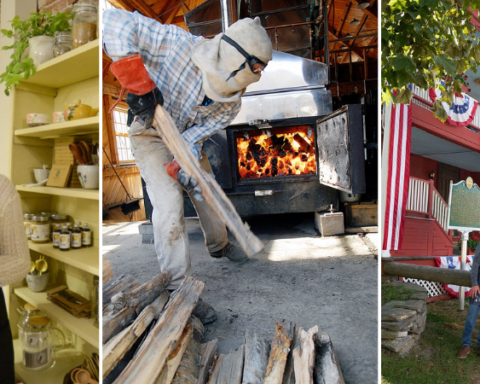
As Mimi Wright explained, it was, “Well, it’s anything to keep the farm going – we do vegetables, but in a limited way; we’re just too short handed. I do workshops in the greenhouse, educational things, foraging – but this summer was terrible for foraging with the lack of rain – and I do baking, jam, and all sorts of stuff for the shop. We made pizza, and homemade bagels on Sunday mornings, and they were to die for. But then, COVID struck, and it totally destroyed that and we haven’t gotten back to it. And, AJ – he’s a great mechanic, does excavator work – he does firewood for sale. And, the manure, the bedding, gets turned into beautiful compost.”
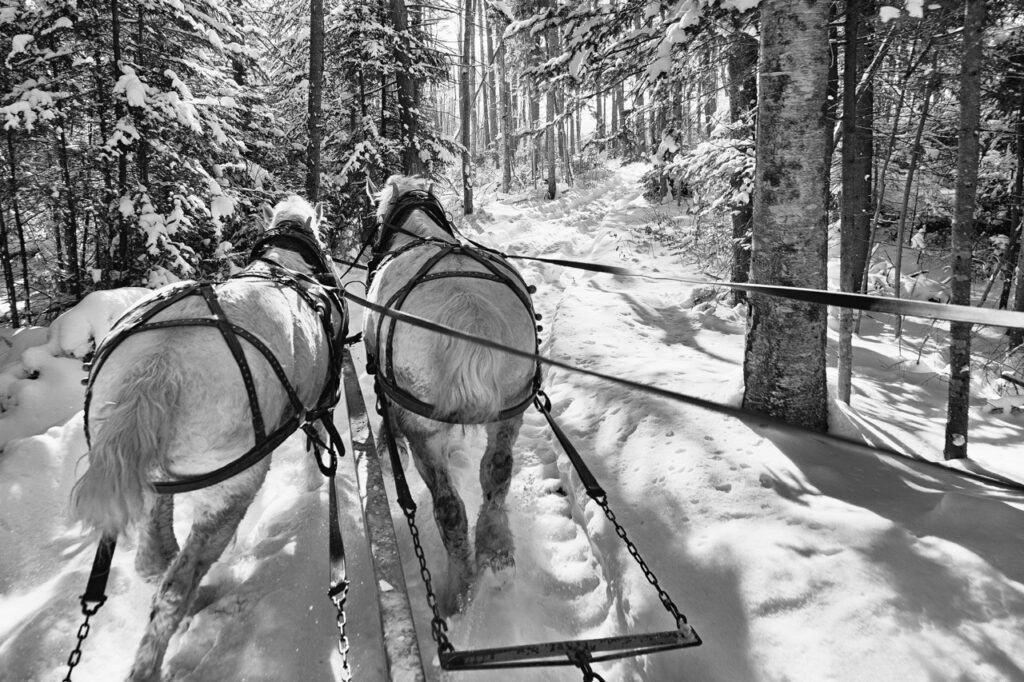
“But – for the sleigh rides – we’ve had Belgians, white percheron, black percheron – but last winter we had three sort of mis-matched horses who were, you know, each great horses but they didn’t work well together,” Mimi Wright said. “So, last winter, we bought a young team.”
That new young team are black percherons Tim and Tom, and they will be replacing the original white percheron team Molly and Meagin. However, Mimi Wright cautioned, Tim and Tom are still working up to pulling heavy loads, “They’re perfect, but they’re very young. They’re spunky – so, the guys need to get them out in the fields now and start working them so that they’re ready for sleigh-ride-season. We didn’t overburden them last winter, and we kept the number of people to five, or six maybe.”
Mimi Wright speculated that the team might still need lighter loads this coming winter, but it all depends on how the team responds to the work, “Maybe they’ll be ready to pull eight. But, we can do bigger groups with the tractor and wagon – and people like going out later in the day, too – through the woods, past the pond – with a picnic with a heated soapstone, warm bread, salami, and cheese. We also have s’more kits. There’s a little warming hut out there, with a fire. People can roast marshmallows, and we serve hot cider out there, too.”
The warming hut is open to the view of the surrounding mountains, including three of the five ski resorts that Londonderry is central to. While there, Farmer Jon gives a tour and history of the farm, and “points out this and that.”
The Wrights and their helper, AJ, run the horse-drawn sleigh rides when the snow conditions permit, and the tractor-drawn wagon rides when it does not. While the rides are no longer just for transportation, they still serve to connect people.
“The word people always use is – magical,” said Mimi Wright, grinning and shaking her head. “Magical. They say it’s a ‘Hallmark experience,’ but it’s not – it’s actually just the real thing. But, they love it. It’s the horses, the bells, the quiet of the snow, the sound of the sleigh on the snow, the fire, the picnic – and it is just the right amount of time.”
One of Tony Schwartz’s most popular images is of this idyllic scene – a set of Taylor Farm’s draft horses stepping through the freshly fallen snow in the pristine landscape of a crisp and wintery Southern Vermont.
As Mimi Wright looked up, Farmer Jon and AJ were priming the tractors to head over to the fairgrounds. They had all been powerwashed, and Farmer Jon wanted a photo.
Walking over to join him, Mimi Wright noted that the future of the farm most likely lies in agrotourism, “That’s what we’ve been leaning much more towards because people come with their kids. They love to feed the animals and get up close with them and it’s so important for them – and the kids – to have that exposure. I mean, a lot of people have never touched a goat before, and our animals are so friendly because they’re used to it.”
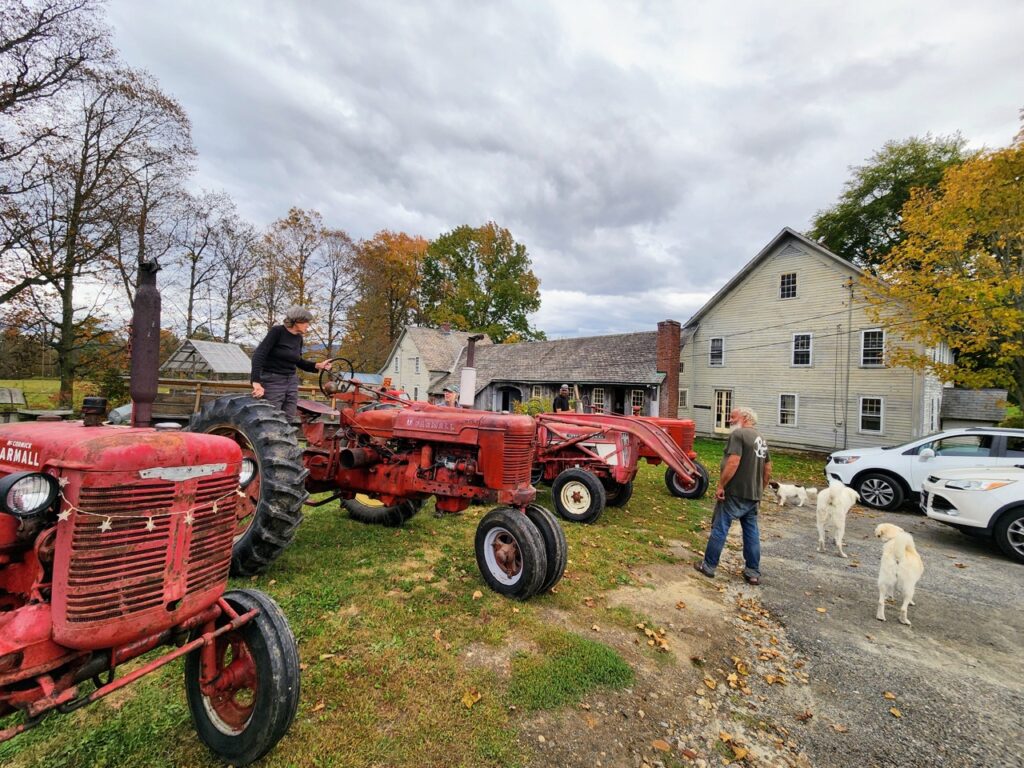
“There are big questions looming ahead,” acknowledged Farmer Jon, wrapping an arm over his sister’s shoulders. “Because, the farm has been such a part of the bulk of my life – and it’s very sentimental to me. But, also, I’m struggling with trying to figure out what is next and what makes money. Agriculture in Vermont is just a thing of the past, unless you’re very large-scale or have these multigenerational farms. Labor is a big issue, and it’s a huge capital investment.”
It was, he added, “a quality of life.”
“Agritourism has always been something that we’ve done,” Farmer Jon acknowledged, looking down at the dogs and then around to the farm land. “Larger farms don’t have the time to take people in, and be ambassadors to Vermont agriculture. This type of small family farm – we’re almost like a living museum.”
Behind the old farmhouse and the line of tractors headed to the fair rests yet another relic, another nod to a bygone era, a 1950s Chevrolet 6100 flatbed truck – its red paint dull and lacking luster, but its robust frame, its classic split screen windshield, and its wooden flatbed still intact. Above it, painted on a sign of the same deep red, reads a motto of the farm, “Make merry, for today too shall pass.”

Danielle Crosier is a landlocked mermaid who found her way to Vermont by accident. She is a wife and mother, a former technical writer (10 years), former educator (19 years), and glass artisan with a background in marketing and strategic management. Her interests, though, lie mainly in studying and understanding systems and improving the lives of those around her. She also loves spending time with her precious children and their significant others, organizing, learning about social geography, creative endeavors, experimenting with various cuisines, and exploring the world around her.