
By Jeff McRae, Vermont Country Magazine.
Though I’m a drummer and knew a lot of the musicians and venue owners in the Shires, I’d never had reason to meet Polly van der Linde. I’d heard of her piano camps and gigged pretty regularly with one of her teachers, Matt Edwards, who’d recently bent my ear about another faculty member, a guy named Tony Lu.
“He’s one of the smartest people I’ve ever met.”
We are fortunate, in southern Vermont, to be home to a lot of highly skilled musicians. One did not generally first refer to them by their brains.
“Why do you say that?”
“He grew up in China and studied at Bennington College and earned a Masters in Piano Performance from Austin Peay State University. He also teaches math at the Hoosac School,” he said.
“And he’s blind.”
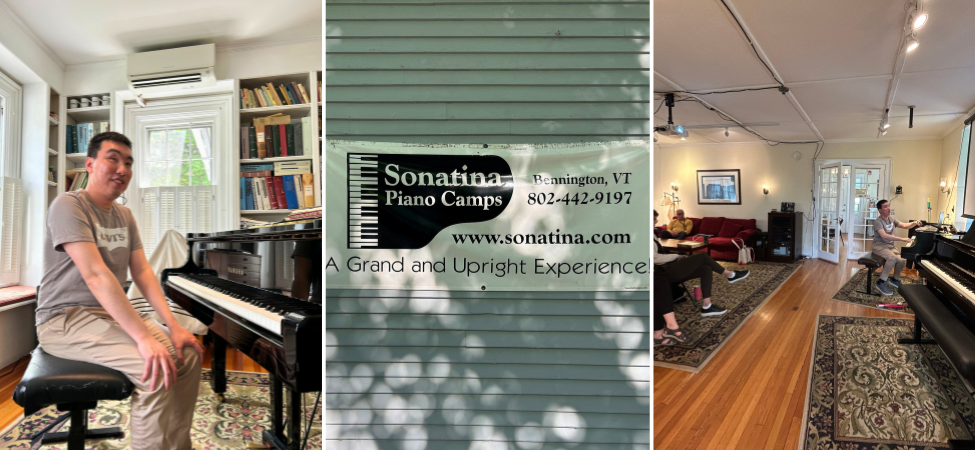
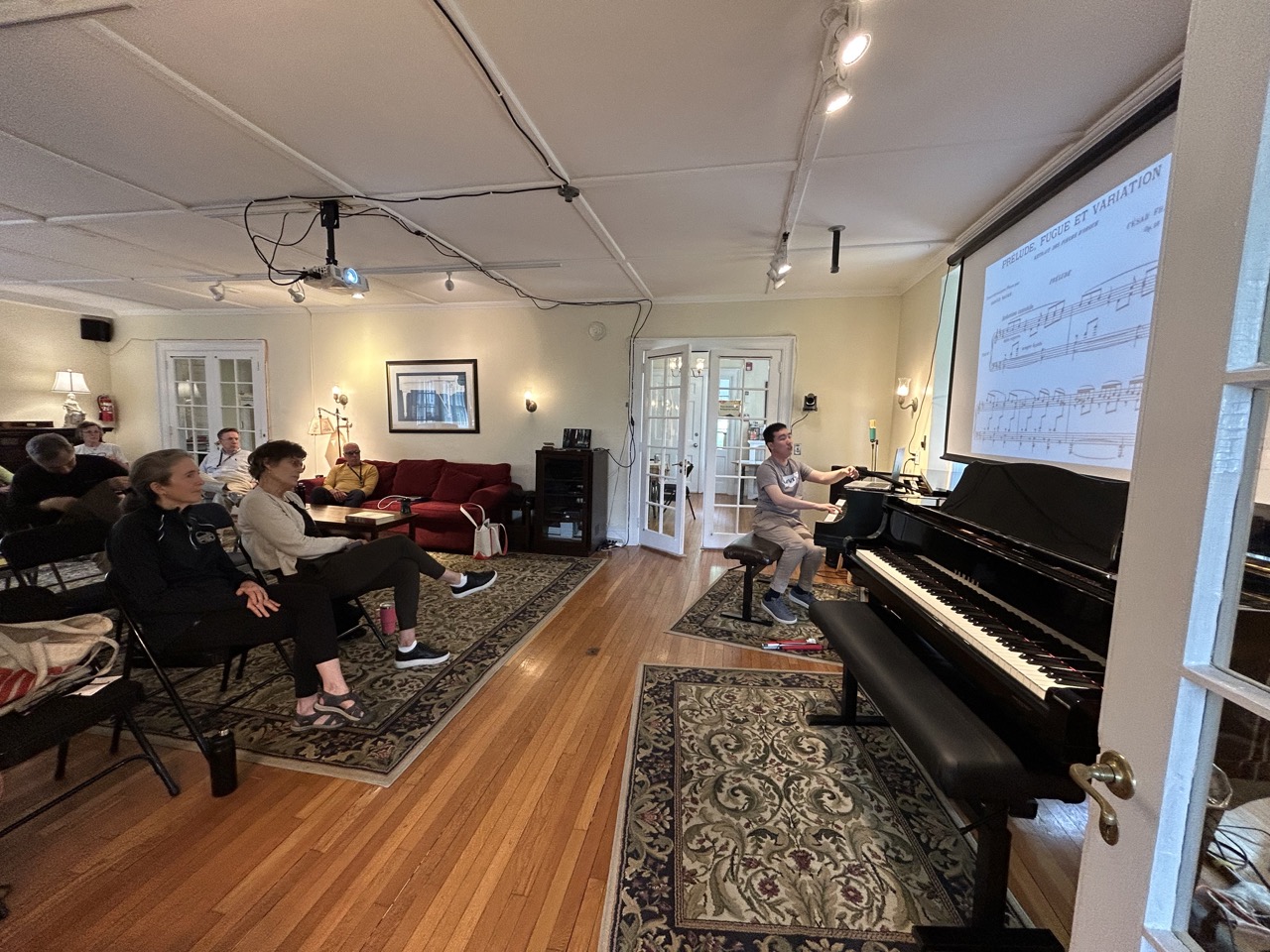
Tony Lu is seated at a grand piano, conducting a master class to a group of adult students at the Sonata Piano Camp. Though blind, his computer, paired to a large screen, is full of opened tabs, visual aids for his lessons. He’s speaking about the musical “push and pull” in a passage of nebulous Scriabin.
“You want the music to move you, you don’t want to move the music. Don’t superimpose something on top of it. Let it move you.”
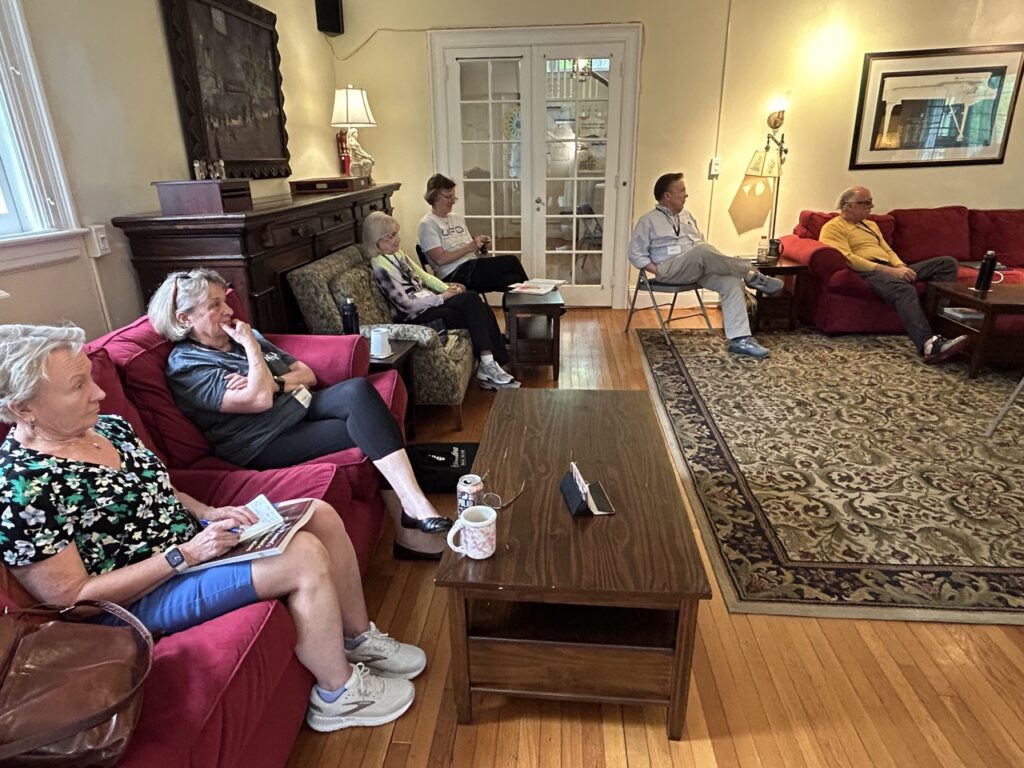
I find a chair and observe the handful of mostly retirement-aged adult students taking notes. At the conclusion, I shake his outstretched hand while van der Linde, owner of Sonatina and Sonata Piano Camps, makes the introductions and leads us into an adjacent room full of couches for our interview.
“I teach math, history and music at the Hoosac School,” he says referring to the nearby private boarding school just over the state line in New York. “At Bennington College, I earned degrees in all three subjects. They were very open to it.”
I was familiar with the Bennington model where students blended subjects into a unique course of study. I hadn’t heard of someone earning triple degrees.
“Sometimes I try not to connect everything I teach,” he said. “My approach is more invested in how you think about things. My teaching here at the camp has little to do with music history, on the surface. But I mix it in. When I play music, I tell people I’m never thinking about functions and equations. My brain is full of music. But it’s the logical steps you put into math that connect.”
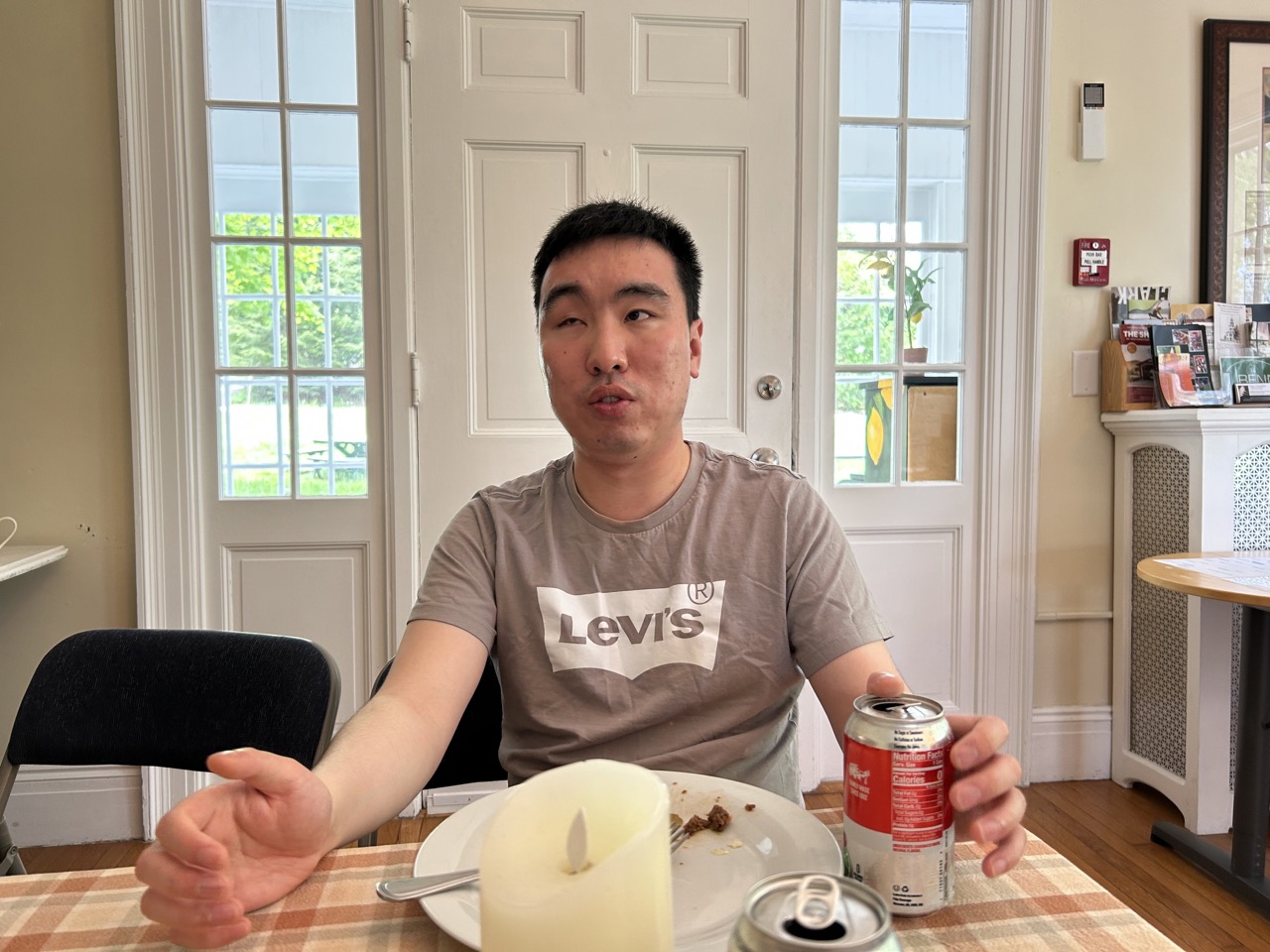
“I was 5 and a half when I started playing piano. My early training began because my parents wanted me to do something and that something came about because no schools wanted to deal with a blind kid.”
“So, I was sort of homeschooled though homeschooling wasn’t really a thing in China at the time. My parents and grandparents just figured out something. Because sports weren’t an option, they were like, ‘Ok, we’ll try piano,’ and I liked it. Finding a teacher, though, was challenging.”
“My parents hired college students to give me lessons but I struggled to memorize the music. I didn’t really practice until later when phones developed recording features. Then, one teacher would record one-minute clips and tell me I was going to have to figure them out.”
“Over time, I found a way to do it. By the time I learned about music braille, I was working on pieces that were too complicated. The braille system stops around the intermediate level.”
“I was already reading on my own and talking to my teachers about this little letter that Chopin wrote and my teacher wasn’t interested–she was like, ‘Let’s get back to the nocturne.’ That’s when I discovered that I was interested in music in a way that not everyone else was.”
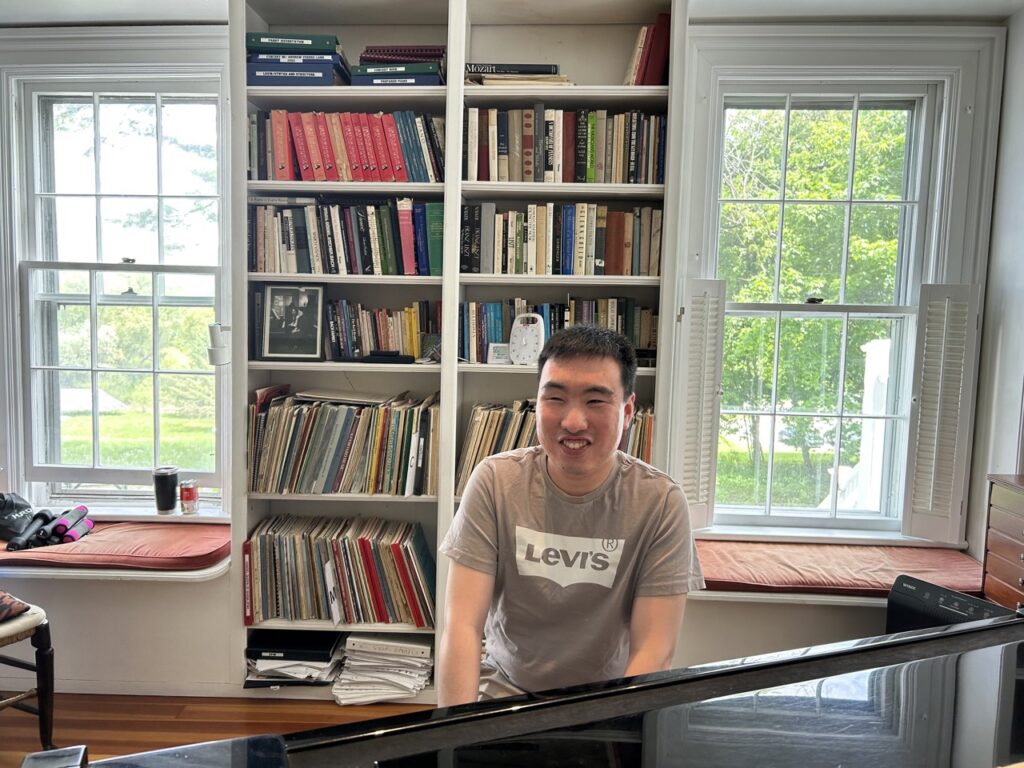
His life is a seeming non-stop string of teaching engagements. He teaches students of every age and at every level. In addition to the music camps and his math gig at the Hoosac School, he offers in-person and online lessons.
“Tony has been a great colleague at Hoosac,” says Kevin Robichaud, Asst. Headmaster and fellow math department teacher. “He is incredibly dedicated to his students and is teaching in some capacity almost year-round.”
On top of Lu’s math classes, one of last year’s music targets was to secure at least a dozen piano students for him at Hoosac. Instead, he attracted over 60.
“Some people joke that I’m crazy because I never stop,” he says. “I’m always doing something. A lot of it is that you don’t view what you’re doing as one thing that you finish and then go on to the next thing. They’re all connected.”
Tony’s life has found its holistic rhythm in the States. His blindness requires daily assistance but he is supported by people who value his talents and will do what it takes to keep him around.
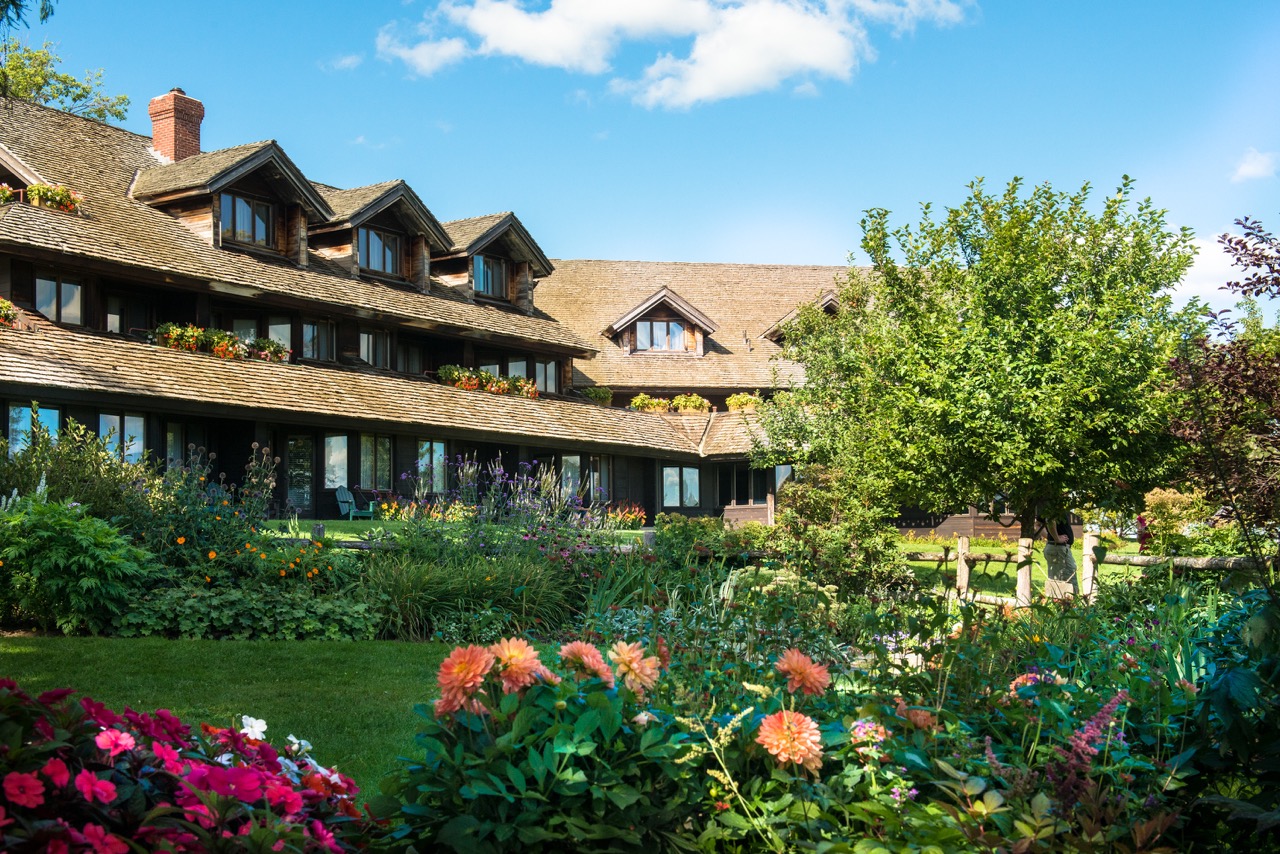
He lives in one half of a duplex about a dozen miles away, owned by one of van der Linde’s sons, Taylor Cobb, who now runs the Summer Sonatina camp. He drives Tony back and forth to Old Bennington. Previously, Polly housed Tony at the mansion and former convent where the immensely popular camps are held and where she maintains a residence. Tony memorized the house layout on his first visit.
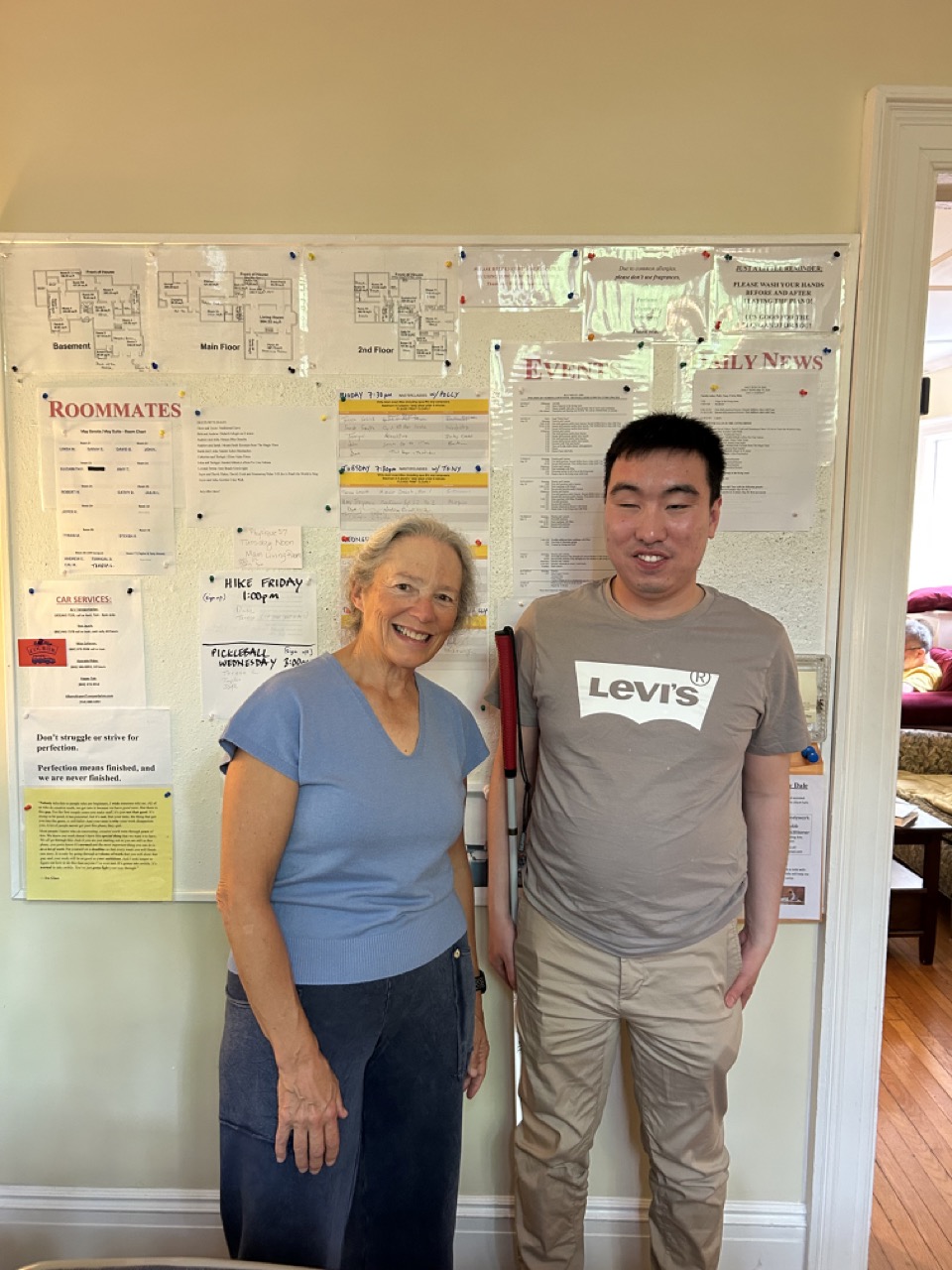
While at camp, Tony relies on van der Linde to tell him his daily teaching schedule, kept on the wall. “We can email it to him, too,” she says. “We find ways.”
“It’s so rare in the music world to have someone who can lecture. It really is. So, we needed to find a way (to keep him) and we found it,” she says.
Van der Linde introduced Lu to the Headmaster of Hoosac and explained how a cooperative employment would help him to remain in the area where he was happy and where he could continue to develop his vocation at both institutions. And so, it came to be.
“I made some visits home to China during summer breaks at Bennington College. I would do some light teaching, usually piano, and some advising about American colleges. Around 2018 the environment there changed. The government gave every Chinese citizen a social credit score so they could track your activity all the time.”
According to Stanford University, “China’s social credit system is a broad, data-driven governance strategy designed to track, evaluate, and rate the ‘trustworthiness’ of individuals, businesses, and government institutions. It operates as a decentralized network of regulations, blacklists, and reward mechanisms…applied to every citizen.”
“I ‘got in trouble’ with a piano teacher there because I taught an ‘improper’ class,” Tony says between mouthfuls of salad. “I was working with her students and noticed that, for some reason, she was not really friendly after the lessons.”
“When I was ready to fly back to the U.S., an immigration officer stopped me and said my score had been lowered and I was banned from flying. I found out the day they dropped my score and I tracked back to what I was doing. I was giving lessons with that teacher. I eventually discovered that her husband was a government official. She reported me.”
“So, my parents took me to Hong Kong by the slow train because I was banned from high speed rail, too. I eventually flew out and that was the last time I saw my parents.”
Between his teaching duties, family separation (he has a younger sister) and navigating the logistics of blindness, Tony’s life is, like learning an instrument, a process of mastery and refinement.
“I remember my parents telling me, from when I was really young, ‘You will always find a way.’ So that’s what I do. I look for ways, for solutions.”
His restrictions affect his parents, too. Repeatedly using the same internet account could attract government attention at home. They must find new ways to stay in touch with their child on the far side of the world.
“The part that made me not feel extremely bad was that that teacher reported me about my teaching method,” he says. “She felt I was spreading Western ideology to young students. My method was so different from the Chinese teaching method.”
“I made students open up with directions like, ‘this little section should be told like it’s a story,’ and that’s not so Chinese at all. In the Chinese method, the teacher gives you instruction and you just receive it.”
“I would give instruction but would also encourage the students to talk with me and give me their opinions. It took time for the adults to open up and make interesting stories out of the music, but in that, I think I did the right thing.”
“I do want to inspire students to find whatever their voice is. In music, it has a lot to do with interpretation and what their approach is. In math they’re forming arguments, as well. I try to help them discover themselves with whatever they’re working on.”
“Music needs some push and pull. I’m talking about sensing that nuance. Learning is about process and that process sometimes takes a long time.”
Maybe life needs some push and pull to keep it going, to give it meaning. In art, restriction often demands creative innovation. Lu’s had plenty of cause to argue with circumstance. Instead, his pragmatic sensibility coupled with a sturdy optimism and a habit of inquiry has led him to a place of balance, at least for now, with life’s elegant tensions.
Jeff McRae is a reporter for the Manchester Journal and Bennington Banner. He’s worked as a fly rod builder, a copywriter, an employment consultant and for fifteen years as a creative writing and literature adjunct professor. His book, The Kingdom Where No One Dies, was shortlisted for the Vermont Book Award in Poetry. An active musician, he also performs in theaters, clubs and concert halls throughout New England.